December 11, 2025 • Mary Marshall
Voice Recognition Passwordless Authentication: How Multilingual AI Is Redefining Enterprise Identity Security
Discover how multilingual AI-powered voice recognition is transforming passwordless authentication and securing global workforces.
Passwords are failing enterprises at scale. According to Verizon’s Data Breach Investigations Report, stolen or weak credentials are involved in over 80% of hacking-related breaches. Despite decades of password hygiene campaigns, security awareness training, and increasingly complex password policies, the human factor remains the most exploited vulnerability in enterprise security. The answer isn’t yet another policy mandate. It’s eliminating passwords altogether—with intelligence built in from the ground up.
Voice recognition passwordless authentication, powered by multilingual AI, is emerging as one of the most powerful and frictionless identity innovations available to enterprise security teams. For global organizations managing diverse, distributed workforces across languages and geographies, this isn’t just a user experience upgrade. It’s a fundamental shift in how identity is verified, governed, and secured.
Why Passwords Continue to Fail — and Why Competitors Haven’t Solved It
Okta’s own research highlights that credential stuffing attacks increased by over 50% year-over-year, yet Okta’s core model still relies heavily on password-centric workflows layered with MFA as an afterthought. SailPoint’s identity governance platform excels at access certification but lacks the depth of frictionless, AI-native authentication experiences. Ping Identity offers federated SSO with some biometric hooks, but multilingual voice intelligence at scale remains an unaddressed gap across the competitive landscape.
This is precisely where modern AI-driven identity management steps ahead. By deploying voice recognition as a primary authentication factor, enterprises can eliminate the password as a vulnerability surface—while simultaneously making access faster, more intuitive, and globally inclusive.
What Multilingual AI Voice Authentication Actually Does
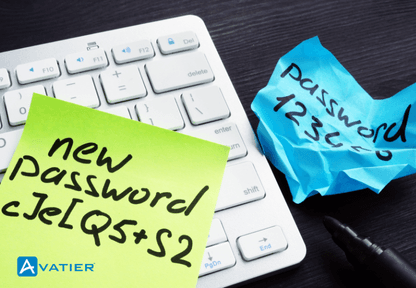
At its core, AI-powered voice recognition authentication works by analyzing acoustic patterns, linguistic cadence, and physiological vocal markers unique to each user. Unlike a PIN or password, a voice biometric cannot be written on a sticky note, phished from an inbox, or brute-forced. When multilingual AI is layered on top, the system becomes capable of:
- Authenticating across 50+ languages and regional dialects without requiring users to speak in a standardized language
- Detecting synthetic or spoofed voice attempts using liveness detection algorithms trained on adversarial inputs
- Adapting dynamically to natural changes in voice caused by aging, illness, or environmental conditions
- Maintaining zero-trust verification standards by continuously assessing confidence scores throughout sessions, not just at login
For enterprises with workforces spanning North America, Europe, Asia-Pacific, and Latin America, the ability to authenticate users in their native language without degrading accuracy is a competitive and operational necessity—not a luxury feature.
The Business Case: Reducing Help Desk Costs While Strengthening Security
Password-related issues account for between 20% and 50% of all IT help desk calls, according to Gartner. At an average cost of $70 per help desk ticket, large enterprises are spending millions annually on a problem that passwordless technology eliminates entirely.
With Avatier’s Identity Anywhere Password Management, organizations move beyond reactive password resets and toward proactive, AI-native identity verification. The platform’s self-service capabilities dramatically reduce help desk dependency while empowering users to resolve their own authentication challenges—at any hour, in any language, from any device.
This isn’t a marginal efficiency gain. For a 10,000-employee enterprise managing tens of thousands of monthly access requests, automating identity verification and password management translates directly into measurable ROI—fewer tickets, fewer escalations, and a security posture that doesn’t depend on human compliance.
Thinking About Okta or Ping Identity? Here’s What They’re Missing.
Organizations evaluating Okta often cite frustration with the platform’s reliance on authenticator apps and push notifications that still require a mobile device in hand. For deskless workers, field employees, or manufacturing floor staff operating in high-noise, hands-busy environments, this introduces friction that reduces adoption and creates workarounds—which introduce new risks.
Ping Identity’s voice biometric capabilities exist largely at the edges of its product portfolio and are not deeply integrated into its lifecycle management workflows. SailPoint customers frequently report that the platform’s strength in governance doesn’t translate cleanly into seamless authentication experiences, leaving a gap between who has access and how they prove it.
Avatier’s architecture is built differently. The platform’s multifactor authentication integration is woven natively into its identity lifecycle management core—not bolted on as a third-party plugin. This means voice recognition authentication works in concert with provisioning, access governance, and compliance workflows. When a user’s role changes, their authentication context updates automatically. When anomalous behavior is detected, adaptive policies trigger without manual intervention.
Multilingual AI Authentication and Zero-Trust: A Natural Alliance
Zero-trust architecture demands that every access request be verified continuously, contextually, and with the assumption that the network is already compromised. Traditional passwords fail this model by design—they are static, shared, and impossible to verify beyond the initial entry point.
Voice recognition passwordless authentication aligns naturally with zero-trust principles because it:
- Provides continuous, behavioral authentication signals throughout a session
- Eliminates shared credentials that enable lateral movement after breach
- Binds identity to a physiological trait that cannot be transferred, delegated, or stolen
- Adapts in real time to risk signals, escalating verification requirements when context shifts
Avatier’s identity management architecture is purpose-built for zero-trust environments, enabling enterprises to enforce least-privilege access with the confidence that the identity on the other end of every session is continuously validated—not just assumed.
Global Workforce Inclusivity: Why Language Matters in Authentication
One of the most overlooked dimensions of enterprise passwordless adoption is linguistic inclusivity. Most voice authentication systems are trained primarily on English-language data, resulting in measurably lower accuracy rates for non-native speakers and users operating in other languages. According to MIT Media Lab research, AI systems trained on biased data sets perform significantly worse for underrepresented demographic groups—creating not just a user experience problem, but a potential compliance and equity issue.
Avatier’s multilingual support extends this same philosophy into authentication. With robust internationalization capabilities, Avatier ensures that identity management workflows—including authentication—are accessible and accurate for users regardless of their primary language. For multinational enterprises, this is a critical differentiator. An authentication system that works for employees in São Paulo, Singapore, and Stockholm with equal accuracy and confidence is the foundation of a truly global security posture.
Compliance Implications of Passwordless Voice Authentication
Regulatory frameworks increasingly recognize biometric authentication as a preferred mechanism for high-assurance identity verification. Under HIPAA, FISMA, NIST 800-53, and SOX, organizations must demonstrate that access to sensitive systems is granted only to verified, authorized individuals. Voice biometrics, when properly implemented with audit trails and data governance controls, satisfies these requirements more effectively than passwords alone.
Key compliance benefits of AI-driven voice authentication include:
- Immutable audit logs tied to physiological identity, not credentials that can be shared
- Continuous authentication that supports NIST’s guidance on session-based access controls
- Reduced insider threat risk by eliminating shared password practices
- Automated provisioning and deprovisioning that ties authentication directly to role-based access policies
Enterprises operating in regulated industries—healthcare, financial services, federal government, energy—face heightened scrutiny around access control. Voice recognition authentication, integrated with a comprehensive identity governance platform, provides the audit depth and enforcement consistency that compliance auditors require and that legacy password systems fundamentally cannot deliver.
The AI Advantage: Self-Learning, Self-Healing Authentication
What separates AI-native voice authentication from early biometric implementations is the system’s capacity to learn and adapt. Early voiceprint systems were brittle—a cold or background noise could cause failures. Modern multilingual AI authentication models are trained on millions of voice samples across acoustic conditions, languages, and physiological variables. They improve continuously as they encounter new data.
This self-learning capability also applies to threat detection. When a synthetic voice or replay attack is attempted, the system’s anomaly detection models flag the discrepancy before access is granted—without requiring a security analyst to review a log after the fact.
For IT teams already stretched thin, automated identity management that handles authentication intelligence without manual oversight is not just convenient. It’s operationally essential.
The Passwordless Future Starts With the Right Platform
The convergence of voice recognition, multilingual AI, and zero-trust identity principles represents the most significant shift in enterprise authentication in decades. Organizations that move now gain the security advantages of eliminating credential-based attack surfaces, the operational benefits of reduced help desk load, and the inclusivity advantages of global language support.
Those that wait will continue paying the cost—in breach risk, compliance exposure, and the productivity drain of a workforce locked out of their own tools.
Explore Avatier’s Identity Anywhere Password Management to see how AI-driven, passwordless authentication can transform how your enterprise verifies identity—across every language, every location, and every device your workforce depends on.