December 6, 2025 • Mary Marshall
The Password Help Desk Alternative: SIP-Aware AI Digital Assistants
Discover how SIP-aware AI assistants are revolutionizing password management, reducing help desk tickets by 80% while enhancing security.
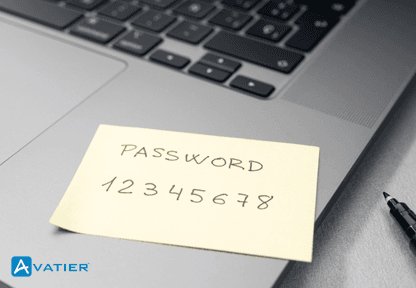
Password-related issues remain the most persistent drain on IT help desk resources. According to Gartner, password resets account for 20-50% of all help desk calls, with each ticket costing organizations between $25 and $70 in IT support time. For large enterprises, this translates to millions in annual operational costs just to maintain access to critical systems.
But what if there was a smarter approach? Enter Session Initiation Protocol (SIP)-aware AI digital assistants—the next evolution in self-service password management that’s transforming how organizations handle user authentication challenges.
The Persistent Password Problem
Password management has long been the Achilles’ heel of enterprise security and productivity. Despite advances in authentication technology, password-related issues continue to plague organizations:
- The average employee manages 191 passwords across various work applications
- A single enterprise company handles approximately 200,000 password reset requests annually
- Password resets cost large organizations an average of $5.2 million per year in help desk resources
- 78% of help desk managers report that password resets are their most time-consuming task
Traditional password management approaches force organizations into an impossible triangle: balancing security requirements, user experience, and operational efficiency. When security policies tighten—requiring more complex passwords with frequent changes—user friction and help desk tickets inevitably increase.
Beyond Traditional Self-Service Password Management
Self-service password management (SSPM) tools emerged as the first generation solution to this problem. While basic SSPM has become standard in most organizations, these systems have significant limitations:
- They typically require pre-registration and security question setup
- Many cannot handle complex authentication scenarios
- They offer limited communication channels
- They struggle with context-aware verification
- They lack intelligence to differentiate between legitimate requests and potential security threats
This is where Avatier’s Identity Anywhere Password Management represents a paradigm shift with its SIP-aware AI digital assistant approach.
What Makes SIP-Aware AI Digital Assistants Different?
SIP (Session Initiation Protocol) is the foundation of modern communication infrastructure, enabling voice, video, and messaging across networks. SIP-aware AI digital assistants leverage this protocol intelligence to create password management experiences that are more secure, accessible, and user-friendly than traditional solutions.
Unlike conventional SSPM tools, SIP-aware AI assistants:
1. Provide Omnichannel Accessibility
SIP-aware assistants meet users where they already work through:
- Enterprise messaging platforms (Microsoft Teams, Slack)
- Voice assistants (Alexa for Business, Google Assistant)
- SMS/text messaging
- Web portals
- Mobile apps
This omnichannel approach increases adoption by removing barriers to access. According to research from Okta, organizations that implement omnichannel self-service solutions see 30-40% higher user adoption rates compared to single-channel approaches.
2. Employ Context-Aware Security
Modern AI-powered password management uses contextual signals to verify user identity:
- Device recognition (is this their usual device?)
- Location awareness (are they in an expected location?)
- Behavioral patterns (is this consistent with past behavior?)
- Network information (are they on a corporate network?)
- Time-based analysis (is this request happening during normal work hours?)
This contextual approach enhances security while reducing false positives that would otherwise lock legitimate users out of systems.
3. Incorporate Natural Language Processing (NLP)
The conversational interface of SIP-aware assistants means users don’t need to navigate complex self-service portals or remember specific commands. They simply express their needs in natural language:
- “I forgot my password to the CRM system”
- “I need to reset my VPN login”
- “My account is locked after too many attempts”
The AI interprets intent, determines the appropriate authentication requirements, and guides users through the reset process in a conversational manner—all while maintaining security protocols.
4. Enable Intelligent Authentication Workflows
Traditional password resets follow rigid processes regardless of risk level. SIP-aware assistants implement dynamic, risk-based authentication:
- Low-risk scenarios (regular user on corporate network during business hours) might require minimal verification
- High-risk scenarios (unusual location, sensitive system access) trigger additional security measures
- Suspicious patterns automatically escalate to human IT staff for review
This intelligent approach optimizes both security and user experience based on actual risk factors rather than one-size-fits-all policies.
Real-World Impact on Help Desk Operations
Organizations implementing SIP-aware AI password assistants report dramatic operational improvements:
- 80% reduction in password-related help desk tickets
- 67% decrease in average resolution time for remaining password issues
- 94% user satisfaction ratings with AI-assisted password resets
- Return on investment within 3-6 months of implementation
A director of IT Operations at a Fortune 500 financial services company reported: “Before implementing Avatier’s AI password assistant, our help desk spent 35% of their time on password resets. We’ve now reduced that to less than 7%, allowing our team to focus on higher-value support issues.”
Implementation Considerations for Enterprise Environments
When evaluating SIP-aware AI digital assistants for password management, organizations should consider several key factors:
1. Integration Capabilities
The solution must seamlessly connect with your existing identity infrastructure, including:
- Directory services (Active Directory, Azure AD, Okta)
- Single sign-on (SSO) platforms
- Multifactor authentication (MFA) solutions
- Help desk ticketing systems
Avatier’s extensive application connectors ensure compatibility with virtually any enterprise identity ecosystem.
2. Compliance Alignment
Password management directly impacts regulatory compliance. Leading solutions support:
- NIST 800-53 password guidelines
- GDPR requirements for personal data protection
- SOX controls for financial systems access
- HIPAA requirements for healthcare organizations
- Industry-specific frameworks like FERPA for educational institutions
3. Security Architecture
Evaluate the security design of any AI password assistant:
- How is user data and communication secured?
- Where does authentication processing occur?
- What encryption standards are implemented?
- How are authentication attempts logged and monitored?
- What controls prevent social engineering attacks?
Avatier’s multifactor authentication integration provides layered security controls that align with zero-trust principles.
4. Enterprise Scalability
For large organizations, the solution must scale across:
- Global regions with varying compliance requirements
- Multiple languages and localization needs
- Diverse user populations (employees, contractors, partners)
- Complex organizational hierarchies
- High-volume authentication scenarios
The Evolution Toward Passwordless Future
While SIP-aware AI assistants dramatically improve password management today, they also serve as a transition technology toward passwordless authentication. The underlying architecture supports emerging standards like:
- FIDO2/WebAuthn
- Biometric authentication
- Certificate-based authentication
- Zero-knowledge proofs
- Continuous adaptive trust assessment
Organizations implementing advanced password management today are building the foundation for passwordless adoption tomorrow. As Avatier’s identity management architecture demonstrates, modular design allows enterprises to evolve their authentication approaches incrementally without disruptive changes.
Evaluating ROI of AI-Powered Password Management
When building the business case for SIP-aware AI assistants, consider these quantifiable benefits:
- Direct cost savings:
- Reduction in help desk staffing requirements
- Lower cost per password reset incident
- Decreased productivity loss from locked accounts
- Security improvements:
- Fewer password-related security incidents
- Reduced attack surface from compromised credentials
- Better enforcement of password policies
- User productivity gains:
- Faster resolution of access issues
- Less time waiting for help desk assistance
- 24/7 availability of reset services
- IT staff reallocation:
- Shift from reactive password support to strategic initiatives
- Focus on higher-value security projects
- Improved staff satisfaction and retention
Conclusion: The Future of Enterprise Password Management
The password isn’t disappearing anytime soon, despite predictions of its demise. What’s changing is how organizations manage the inevitable friction that passwords create.
SIP-aware AI digital assistants represent the most significant advancement in enterprise password management in the past decade. By combining artificial intelligence, contextual security, and conversational interfaces, these solutions transform what was once a painful IT burden into an efficient, secure process.
Avatier’s Identity Anywhere Password Management exemplifies this approach—delivering an intelligent, secure alternative to traditional help desk password support that meets both user experience expectations and enterprise security requirements.
As organizations continue their digital transformation journeys, modernizing password management isn’t merely an IT convenience—it’s a critical component of both security strategy and operational efficiency. In a world where every minute of system access matters, intelligent password management has become a competitive advantage that leading organizations can no longer afford to ignore.