September 3, 2025 • Mary Marshall
Intelligent Automation Excellence: How Avatier Automates vs Microsoft’s Human Requirements
Discover how Avatier’s automation outperforms Microsoft’s manual processes in identity management, enhancing productivity and security.
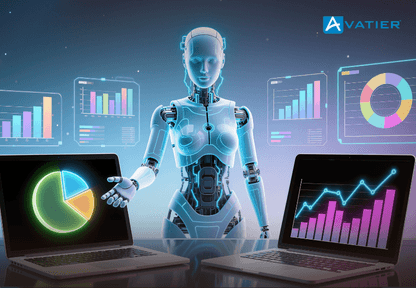
The debate between automation and human-centric approaches is at a pivotal junction. At the heart of this dialogue is Avatier, a pioneer in identity and access management solutions, which stands against the more traditional methods of technology giants like Microsoft. By leveraging intelligent automation across its platforms, Avatier drastically reduces the need for human intervention in processes traditionally dominated by labor-intensive tasks.
The Automation Advantage
Avatier’s robust use of intelligent automation brings a myriad of advantages unseen in Microsoft’s approaches that still rely heavily on manual processes. By automating routine tasks such as user provisioning, password resets, and compliance checks, Avatier not only minimizes human error but also accelerates workflows, thus ensuring faster service delivery and improved operational efficiency.
Consider user provisioning—a task often fraught with complexity and prone to human error. Avatier’s user provisioning software offers an automated workflow that instantly creates or modifies user accounts based on predefined criteria. According to a Forrester study, organizations using automated identity processes can see a time reduction of up to 90% in handling such tasks.
Avatier’s Automation Tools: A Comparison
Avatier employs artificial intelligence to enhance its security frameworks, an area where Microsoft’s solution can lag. Through AI-driven analytics, Avatier continuously monitors access patterns and swiftly detects anomalies, thus preemptively mitigating risks. AI automation not only helps identify potential security threats but also reduces the administrative burden by enhancing the decision-making process within workflows.
To further explore Avatier’s expansive suite of identity management capabilities, one can delve into their identity management solutions focusing on flexibility and customization. Unlike Microsoft, which often requires manual configuration and employee oversight, Avatier’s automation seamlessly integrates with existing IT environments, reducing the operational workload and increasing uptime.
Beyond Microsoft’s Human-Centric Requirements
Microsoft’s strategies in identity management often involve substantial human oversight. While their systems are robust, they typically require extensive manual configuration and ongoing user management. This not only results in higher operational costs but also increases the likelihood of human error.
According to Gartner, manual identity management processes are 30% more prone to error compared to automated workflows. By eliminating these cumbersome human-centric requirements, Avatier shifts the paradigm, allowing organizations to redirect their human resources towards strategic initiatives rather than mundane administrative tasks.
Case Study: Enhanced Efficiency
A compelling illustration of Avatier’s advantage over Microsoft comes from an analysis of a mid-sized firm in the healthcare sector. By switching from Microsoft’s manual identity management systems to Avatier’s automated solutions, the company reduced its workforce dedicated to identity governance by 40%, aligning with industry trends that favor automation. Notably, password reset requests, a frequent and costly interruption in IT, were reduced by 70% due to the implementation of self-service password reset tools.
By integrating identity container solutions, the firm further streamlined its operations, enhancing its security posture without the constant need for human oversight. This transition underscores how Avatier’s advanced automation provides a superior, cost-effective alternative to Microsoft’s human-dependent models.
Embracing a Zero-Trust Model
The contemporary digital landscape demands a zero-trust approach to security, a principle Avatier embeds in its solutions. Through automation, Avatier ensures continuous verification, fortifying defenses against cybersecurity threats. Unlike Microsoft’s often static verification processes, Avatier’s automated identity systems dynamically adapt to new information, providing real-time protection and empowering enterprises to enforce stringent access controls.
Avatier’s zero-trust framework aligns with modern security standards and compliance requirements, thus assuring organizations of not only enhanced security but also regulatory compliance. This is particularly crucial given that regulatory compliance failures can cost companies millions annually, as estimated by industry reports.
Future Trends in Identity Management
As businesses evolve, so too must their identity management strategies. The future is clear: automation and AI will dominate identity and access management, offering unparalleled efficiency and security. Avatier, leading the way with cutting-edge technologies and forward-thinking strategies, demonstrates that the future of identity management is not bound by human limitations but rather propelled by intelligent automation.
Organizations looking to future-proof their identity management systems should strongly consider Avatier’s offerings. The advantages are clear: reduced operational costs, heightened security, and most importantly, freeing human resources to focus on value-creating activities rather than routine administrative tasks.
Conclusion
In an intersection of traditional methods and pioneering technological advances, Avatier transcends the limitations imposed by human-dependent processes featured by competitors like Microsoft. The intelligent automation presented by Avatier not only enhances efficiency and security but also sets a new standard in identity management.
For those intrigued by the transformative potential of automation, exploring Avatier’s diverse solutions such as self-service identity management could be the first step in embracing a dynamic, secure, and efficient future.