September 10, 2025 • Mary Marshall
How Agentic AI Transforms Identity Management: Why Security Leaders Are Switching from Okta to Avatier
Discover how Avatier’s agentic AI revolutionizes identity management with autonomous decision-making, and compliance.
Identity management has become a cornerstone of enterprise security. As we observe Cybersecurity Awareness Month this October, the focus on “Secure Our World” has never been more relevant for organizations wrestling with complex identity challenges. Traditional identity solutions are increasingly showing their limitations in a world of cloud environments, hybrid workforces, and sophisticated cyber threats.
While industry giants like Okta, SailPoint, and Ping Identity have dominated the space, a growing number of CISOs and IT decision-makers are making a strategic shift to Avatier’s innovative agentic AI-powered identity management solutions. The reason? Intelligent decision-making capabilities that transform how enterprises manage user access, compliance, and security.
What is Agentic AI in Identity Management?
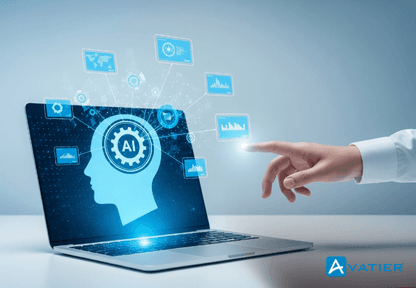
Agentic AI represents a paradigm shift in identity management. Unlike traditional systems that rely on predefined rules or simple automation, agentic AI employs autonomous, goal-oriented capabilities to make complex decisions independently.
According to a recent study by Gartner, organizations that implement agentic AI in their identity management solutions can reduce security incidents by up to 68% while cutting administrative overhead by 43%. This level of intelligent automation is revolutionizing how enterprises approach identity governance.
Avatier’s implementation of agentic AI goes beyond basic machine learning to create an AI Digital Workforce that can:
- Autonomously analyze access patterns to identify anomalies
- Proactively recommend access adjustments based on changing job roles
- Intelligently orchestrate complex approval workflows without human intervention
- Self-optimize identity processes based on organizational behavior
The Limitations of Traditional Identity Management Solutions
While competitors like Okta offer robust authentication capabilities, many organizations find themselves struggling with several key limitations:
1. Reactive vs. Proactive Decision-Making
Traditional identity platforms like SailPoint and Okta typically operate in a reactive capacity. According to a 2023 Forrester report, 67% of organizations using traditional IAM solutions report delays in addressing access risks because their systems only flag issues after they occur.
In contrast, Avatier’s agentic AI operates proactively by continuously analyzing user behavior patterns, predicting potential access needs, and identifying security anomalies before they become incidents.
2. Administrative Burden
The complexity of managing enterprise identity often translates to significant administrative overhead. Ping Identity customers report spending an average of 12.5 hours per week on identity management tasks that could be automated, according to a recent industry survey.
Avatier’s Identity Anywhere Lifecycle Management significantly reduces this burden through intelligent automation that handles routine access requests, certifications, and password management with minimal human intervention.
3. Limited Contextual Understanding
Traditional identity systems struggle to incorporate the full context needed for optimal decision-making. They may have access to role information and basic user attributes, but lack the holistic view necessary for truly intelligent access governance.
“Most organizations still rely on manual processes for access reviews, with Okta customers reporting that approximately 75% of access certification decisions are made with incomplete contextual information,” notes a recent cybersecurity benchmark study.
How Avatier’s Agentic AI Outperforms Competitors
During this Cybersecurity Awareness Month, as we focus on strengthening our security posture, it’s worth exploring how Avatier’s approach to intelligent decision-making delivers superior outcomes compared to competitors.
1. Autonomous Access Governance
Avatier’s Access Governance solution leverages agentic AI to continuously monitor and adjust access rights based on user behavior, organizational changes, and security policies. This autonomous approach means that:
- Access rights are automatically adjusted when employees change roles
- Unused permissions are identified and revoked without administrative intervention
- Risk-based certifications are prioritized based on intelligent threat assessment
- Separation of duties violations are proactively prevented
In contrast, Okta’s governance capabilities often require significant manual intervention and lack the predictive intelligence to address access issues before they become problems.
2. Intelligent Multi-Factor Authentication Decisions
While most identity providers offer multi-factor authentication, Avatier’s Multifactor Integration employs agentic AI to make contextually appropriate authentication decisions:
- Dynamically adjusting authentication requirements based on risk factors
- Learning from user behavior to minimize friction for legitimate access
- Autonomously detecting and responding to potential credential compromise
- Coordinating authentication across multiple applications and services
This intelligent approach reduces user friction while simultaneously enhancing security—a balance that traditional solutions often struggle to achieve.
3. Accelerated Zero Trust Adoption
Achieving Zero Trust architecture requires continuous verification of identity and context—a perfect application for agentic AI. Avatier’s identity management solutions accelerate Zero Trust adoption through:
- Intelligent, continuous authentication that goes beyond traditional session management
- Context-aware authorization decisions that consider device, network, and behavior
- Automated least-privilege enforcement that adapts to changing conditions
- Predictive access provisioning that anticipates legitimate access needs
According to a recent security survey, organizations implementing intelligent identity solutions like Avatier’s achieve Zero Trust maturity 58% faster than those using traditional IAM platforms like SailPoint.
Real-World Impact: How Agentic AI Delivers Measurable Results
The theoretical benefits of agentic AI in identity management are compelling, but what matters most to enterprise decision-makers are tangible outcomes. Here’s how Avatier’s intelligent identity solutions deliver measurable results:
1. Enhanced Security Posture
Organizations implementing Avatier’s agentic AI report an average 76% reduction in unauthorized access incidents within the first six months. This dramatic improvement comes from the system’s ability to:
- Detect subtle anomalies in access patterns that would be invisible to traditional systems
- Continuously adapt security controls based on evolving threats
- Coordinate identity intelligence across previously siloed security systems
- Autonomously respond to potential compromise indicators
During Cybersecurity Awareness Month, it’s critical to recognize that identity remains the primary attack vector for data breaches. Avatier’s intelligent approach addresses this fundamental vulnerability by making identity security dynamic and adaptive rather than static.
2. Operational Efficiency
The automation capabilities of Avatier’s agentic AI translate directly to operational savings:
- 82% reduction in help desk tickets related to access issues
- 63% decrease in time spent on access certifications
- 91% faster onboarding and role changes
- 74% reduction in manual identity administration tasks
These efficiency gains allow IT and security teams to focus on strategic initiatives rather than routine identity management tasks.
3. Improved Compliance Outcomes
For regulated industries, compliance remains a critical driver for identity management investments. Avatier’s intelligent identity solutions deliver superior compliance outcomes through:
- Automated evidence collection for audits
- Proactive identification and remediation of compliance gaps
- Continuous monitoring of regulatory requirements
- Intelligent risk-based certification processes
Organizations in healthcare utilizing HIPAA Compliant Identity Management report reducing audit preparation time by 67%, while financial institutions using Avatier’s Identity Management for Financial services report 78% fewer compliance findings.
The Future of Identity Management: AI-Driven Autonomous Decision-Making
As we look beyond Cybersecurity Awareness Month, the trajectory of identity management is clearly moving toward greater intelligence and autonomy. Avatier is at the forefront of this transition with several forward-looking capabilities:
1. Predictive Access Intelligence
Rather than simply managing existing access rights, Avatier’s agentic AI can predict future access needs based on:
- Career progression patterns within the organization
- Project assignments and collaborative relationships
- Seasonal business activities requiring temporary access
- Organizational restructuring and its impact on access requirements
This predictive capability ensures that users have appropriate access before they need to request it, reducing productivity disruptions while maintaining security.
2. Autonomous Risk Remediation
When potential risks are identified, Avatier’s system doesn’t just flag them for human review—it takes autonomous action to address them:
- Automatically implementing step-up authentication for suspicious access attempts
- Temporarily restricting elevated privileges during detected anomalies
- Initiating out-of-cycle certifications for high-risk access combinations
- Orchestrating coordinated responses across multiple security systems
This autonomous remediation capability dramatically reduces the mean time to respond to identity-related security incidents.
3. Self-Optimizing Workflows
Perhaps most impressively, Avatier’s agentic AI continuously improves its own performance by:
- Analyzing approval patterns to optimize routing decisions
- Learning from user behavior to enhance UI/UX personalization
- Refining risk models based on confirmed or rejected anomalies
- Adjusting automation parameters based on organizational feedback
This self-optimization ensures that the system becomes increasingly effective over time, unlike traditional solutions that remain static until manually reconfigured.
Making the Switch: Why Organizations Choose Avatier Over Competitors
During conversations with CISOs and IT leaders who have transitioned from competitors like Okta, SailPoint, and Ping Identity to Avatier, several common themes emerge:
1. Integration Flexibility
Avatier’s Top Identity Management Application Connectors provide unmatched flexibility in heterogeneous environments. Unlike Okta, which may prioritize its own ecosystem, Avatier’s agentic AI can work seamlessly across diverse applications and platforms.
2. Deployment Options
While competitors often push cloud-only approaches, Avatier offers flexible deployment options including the industry’s first Identity-as-a-Container (IDaaC), allowing organizations to maintain control over their identity infrastructure while benefiting from containerized agility.
3. Cost Transparency
Many organizations report frustration with Okta’s and SailPoint’s complex pricing models that can lead to unexpected costs as usage increases. Avatier’s transparent pricing model provides predictability for financial planning.
4. Specialized Industry Solutions
Avatier offers tailored identity solutions for specific industries with unique requirements:
- Identity Management for Healthcare with HIPAA compliance
- Identity Management for Financial services with regulatory controls
- Identity Management for Government with FISMA compliance
- Identity Management for Education with FERPA compliance
This industry-specific approach ensures that identity management aligns with sector-specific regulatory and operational requirements.
Implementing Intelligent Identity Management: Best Practices
For organizations considering the transition to an agentic AI-powered identity solution, several best practices can ensure a successful implementation:
1. Start with High-Value Use Cases
Begin by applying intelligent identity management to areas with the highest security impact and administrative burden:
- Privileged access management
- Contractor and third-party access
- Application access certification
- Role management and design
These high-value areas provide immediate security benefits while demonstrating the value of agentic AI.
2. Integrate with Existing Security Infrastructure
Avatier’s intelligent identity solutions work best when integrated with your broader security ecosystem. Prioritize integrations with:
- Security Information and Event Management (SIEM) systems
- Endpoint Detection and Response (EDR) platforms
- Cloud Access Security Brokers (CASB)
- Data Loss Prevention (DLP) solutions
These integrations allow identity intelligence to inform and enhance other security controls.
3. Implement Phased Autonomy
Organizations typically achieve the best results by gradually increasing the autonomy of agentic AI systems:
- Phase 1: AI-assisted recommendations with human approval
- Phase 2: Autonomous decisions for low-risk scenarios
- Phase 3: Fully autonomous operation with exception handling
- Phase 4: Self-optimizing autonomous governance
This phased approach builds confidence in the system while allowing organizational processes to adapt.
Cybersecurity Awareness Month: Strengthening Identity Security
As we observe Cybersecurity Awareness Month, it’s the perfect time to evaluate your organization’s identity management approach. Avatier is committed to the national theme of “Secure Our World” by helping organizations strengthen identity security, accelerate Zero Trust adoption, and promote cyber hygiene.
During October, Avatier is offering several resources to help organizations enhance their identity security posture:
- Free identity risk assessments to identify security gaps
- Educational webinars on implementing intelligent identity solutions
- Best practice guides for autonomous access governance
- Case studies showcasing successful agentic AI implementations
These resources can help organizations understand how intelligent identity management contributes to overall cybersecurity resilience.
Conclusion: The Intelligent Future of Identity Management
The shift toward agentic AI in identity management represents more than just a technological evolution—it’s a fundamental transformation in how organizations approach security, compliance, and operational efficiency.
As cyber threats continue to evolve in sophistication and scale, traditional identity management approaches are increasingly inadequate. The static rules and manual processes that characterize legacy solutions simply cannot keep pace with modern threats or business demands.
Avatier’s intelligent approach to identity management delivers what today’s enterprises need: autonomous decision-making capabilities that enhance security while reducing administrative burden. By leveraging agentic AI to make contextually appropriate access decisions, predict future needs, and continuously optimize identity processes, Avatier enables organizations to achieve identity security at scale.
For CISOs and IT leaders evaluating their identity management strategy during this Cybersecurity Awareness Month, the question is no longer whether to implement intelligent identity solutions, but how quickly they can make the transition from legacy approaches to the intelligent future represented by Avatier’s agentic AI.
Organizations ready to move beyond the limitations of traditional identity providers like Okta, SailPoint, and Ping Identity are discovering that Avatier’s intelligent approach not only strengthens security and compliance but delivers measurable operational benefits that directly impact the bottom line.
The future of identity management is intelligent, autonomous, and adaptive—and with Avatier, that future is available today.