July 12, 2025 • Mary Marshall
FISMA Compliance Checklist: Identity Requirements Using Avatier
Explore Avatier’s solutions for meeting FISMA compliance, ensuring secure identity management and access control through automation.
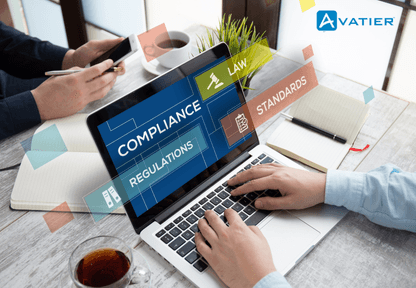
Ensuring robust cybersecurity compliance is not just an option but a necessity. As organizations increasingly adopt cloud services and remote work models, adhering to federal regulations like the Federal Information Security Management Act (FISMA) becomes crucial. Ensuring compliance with FISMA requires a comprehensive approach to manage identity, protecting sensitive information and maintaining rigorous security protocols.
This article serves as a detailed FISMA compliance checklist focusing on identity requirements, utilizing Avatier’s advanced security solutions to streamline compliance processes.
Understanding FISMA and Its Security Requirements
FISMA is a United States federal law enacted in 2002 that requires government agencies and their contractors to develop, document, and implement an information security program to protect the data and information systems that support their operations. The National Institute of Standards and Technology (NIST) develops guidelines to assist with FISMA compliance, specifically through Special Publication 800-53.
NIST SP 800-53 outlines security and privacy controls for federal information systems and organizations. It emphasizes aspects such as access control, audit and accountability, identification and authentication, and system communication protection—all critical areas where identity management solutions play a significant role.
Key Identity Management Requirements for FISMA Compliance
- Access Control
Implementing a robust access control policy is fundamental to protecting sensitive federal information. Access controls ensure that only authorized users can access specific data or systems. Avatier’s Identity Management solutions facilitate this by providing detailed control over user access through comprehensive identity governance frameworks. Avatier’s Access Governance solution simplifies permission settings and maintains strict access protocols.
Learn more about Avatier’s identity management features.
- Identification and Authentication
Accurate identification and strong authentication mechanisms are vital to verify user identities before granting access. Avatier’s platform integrates multi-factor authentication (MFA) to enhance security measures. MFA requires users to present two or more verification factors, reducing the risk of security breaches due to compromised credentials.
Explore Avatier’s MFA integration.
- Audit and Accountability
Effective auditing mechanisms help track access and changes to sensitive information, thereby maintaining accountability. Avatier provides automated compliance and IT audit solutions that seamlessly integrate with existing systems, ensuring comprehensive logging and monitoring. This ensures that every access attempt is recorded and anomalies are promptly identified.
Discover Avatier’s automated audit solutions.
Avatier’s Advantage in Achieving FISMA Compliance
Avatier offers a unified platform that consolidates identity management capabilities, enabling organizations to implement NIST’s SP 800-53 controls efficiently. By leveraging automation and AI-driven tools, Avatier simplifies the management and scaling of identity solutions across various environments, whether on-premises or in the cloud.
Automating User Provisioning and De-provisioning
Automating user provisioning and de-provisioning processes is crucial to minimizing security risks associated with outdated access rights. Avatier allows for automated workflows, ensuring employees only have access necessary for their roles and that their access is promptly revoked when no longer needed.
Enhancing Security with Zero-Trust Principles
The shift towards a zero-trust architecture, which assumes breaches are inevitable and focuses on limiting access as tightly as possible, aligns well with FISMA requirements. Avatier’s solutions support zero-trust principles through continuous verification processes and stringent access controls.
Competitors and Industry Statistics
Research by Forrester suggests that a zero-trust architecture can reduce data breach incidents by up to 50%. Furthermore, Gartner estimates that by 2025, 80% of enterprises will unify web, cloud, and private application access through a single vendor’s identity solution framework.
In comparison, leading competitors like Okta, Ping Identity, and SailPoint offer similar compliance features but can fall short in areas such as integration flexibility and cost-effectiveness, where Avatier excels with its containerized identity management solutions.
For organizations considering Okta, know that Avatier offers more scalable solutions with lower total cost of ownership. Those evaluating SailPoint can benefit from Avatier’s emphasis on seamless user provisioning and a user-friendly interface, simplifying compliance complexity.
Conclusion
Achieving FISMA compliance need not be an overwhelming task. With Avatier’s solutions, organizations can effectively manage identity and access, automate tedious processes, and ensure compliance efficiently. Leveraging an innovative IAM provider like Avatier can significantly enhance security posture while simplifying the path to FISMA compliance.
For more detailed information on Avatier’s capabilities in supporting FISMA compliance, visit their FISMA Compliance Solutions page.
By choosing Avatier, organizations position themselves at the forefront of identity management, equipped with tools that not only meet but exceed compliance requirements.