December 4, 2025 • Mary Marshall
ERP Password Management: Enforcing Policy in Complex Business Systems
Discover how advanced password management solutions can strengthen security across your ERP systems, and reduce help desk costs.
Managing passwords across multiple ERP systems presents significant security and operational challenges. With the average employee managing between 70-80 passwords according to research from the Ponemon Institute, organizations struggle to balance robust security with user convenience. For IT leaders responsible for enterprise resource planning (ERP) systems—the backbone of business operations—this challenge is particularly acute.
The Challenge of ERP Password Management
Enterprise Resource Planning systems integrate critical business processes—from finance and HR to supply chain and manufacturing. Their centralized nature makes them prime targets for attackers, with compromised credentials being a leading attack vector. According to IBM’s Cost of a Data Breach Report, compromised credentials were responsible for 20% of breaches, with an average breach cost of $4.35 million.
ERP systems often present unique password management challenges:
- Multiple Interconnected Systems: Most enterprises utilize several ERP modules or systems that may have different password requirements.
- Legacy Integration Issues: Older ERP components may not support modern authentication methods.
- Complex User Access Rights: ERP systems typically have intricate permission structures across business units.
- Compliance Requirements: Industry regulations often mandate specific password policies and access controls.
For organizations relying on systems like SAP, Oracle, or Microsoft Dynamics, maintaining consistent password policies across these platforms while ensuring user productivity remains a significant challenge.
The Business Impact of Poor ERP Password Management
Inadequate password management in ERP environments leads to several costly business problems:
1. Increased Help Desk Burden
Password reset requests constitute 20-50% of all help desk calls, according to Gartner research. For large enterprises, this translates to millions in annual support costs. When ERP users are locked out due to forgotten passwords, the business impact extends beyond IT costs—it affects operational continuity.
2. Security Vulnerabilities
When faced with complex password requirements across multiple systems, users often resort to insecure practices:
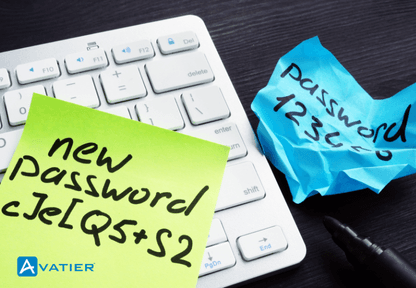
- Writing down passwords
- Using identical passwords across systems
- Creating simple, easily memorable passwords
- Infrequent password changes
These behaviors create security gaps that malicious actors can exploit to gain unauthorized access to critical ERP functions and sensitive business data.
3. Compliance Failures
For regulated industries, inconsistent password policies across ERP systems can lead to compliance violations. Healthcare organizations must maintain HIPAA compliance, financial institutions face SOX requirements, and government contractors must adhere to FISMA standards.
Modern Approaches to ERP Password Management
To address these challenges, organizations are implementing comprehensive password management solutions designed specifically for complex business systems.
Automated Password Policy Enforcement
Advanced solutions like Password Bouncer from Avatier provide centralized enforcement of password policies across diverse ERP environments. This approach ensures that regardless of which system users are accessing, consistent security standards apply.
Key capabilities to look for include:
- Customizable Password Rules: Configurable policies that align with industry regulations and organizational requirements.
- Dictionary Attack Prevention: Blocking common passwords and easily guessed combinations.
- Contextual Requirements: Enforcing stronger passwords for highly privileged accounts or sensitive ERP modules.
- Real-time Password Strength Validation: Immediate feedback on password strength during creation.
Self-Service Password Reset Capabilities
Self-service password management dramatically reduces help desk costs while improving user experience. According to Forrester Research, each help desk call for password resets costs between $25-$70. Implementing self-service capabilities can reduce these incidents by up to 95%.
Effective self-service password reset solutions for ERP environments should offer:
- Multi-factor Authentication: Ensuring secure identity verification before password resets.
- Mobile Accessibility: Allowing users to reset passwords from any device.
- Integration with Multiple ERP Systems: Supporting password changes across diverse platforms.
- Intuitive User Experience: Minimizing training requirements with clear instructions.
Single Sign-On Integration
While implementing comprehensive password policies remains essential, reducing password fatigue through Single Sign-On (SSO) can significantly improve both security and user experience. By enabling users to authenticate once to access multiple ERP components, organizations can enforce stronger authentication while simplifying the user experience.
Implementation Best Practices for ERP Password Management
Successfully deploying password management across complex ERP environments requires careful planning and execution.
1. Develop a Comprehensive Password Policy
Before implementing technical solutions, establish clear organizational standards:
- Password Complexity Requirements: Define minimum length, character types, and complexity rules.
- Password Rotation Policies: Determine how frequently passwords must be changed.
- Account Lockout Parameters: Specify failed attempt thresholds and lockout durations.
- Recovery Procedures: Document the official process for regaining access.
These policies should reflect both security best practices and the operational realities of your organization. Consider industry regulations such as NIST 800-53 when developing these standards.
2. Map Your ERP Ecosystem
Document your entire ERP landscape, including:
- All ERP systems and modules
- Authentication methods supported by each
- User populations and access patterns
- Integration points and dependencies
This mapping provides the foundation for implementing consistent password management across your environment.
3. Prioritize High-Risk Systems
Not all ERP components carry the same risk. Prioritize implementation based on:
- Systems with sensitive data (financial, personal information)
- Modules with privileged access capabilities
- Components with known security vulnerabilities
- Systems facing compliance requirements
4. Implement Gradual Rollout
Avoid disrupting business operations by implementing password management changes incrementally:
- Begin with pilot groups to validate the approach
- Provide clear communication and training before each phase
- Monitor help desk volume for password-related issues
- Gather feedback to refine the implementation
Advanced Features for Enterprise ERP Password Management
For organizations with sophisticated ERP environments, consider these advanced password management capabilities:
Password Synchronization
Password synchronization ensures that when users change their password in one system, the change propagates to other connected systems. This maintains security while reducing the number of credentials users must remember.
Enterprise password management solutions should offer:
- Bi-directional synchronization between systems
- Failure handling and retry mechanisms
- Audit logging of synchronization events
- Support for different password formats and requirements
Risk-Based Authentication
Adaptive authentication adjusts security requirements based on contextual risk factors when users access ERP systems:
- Location-based validation
- Time-of-day restrictions
- Device recognition
- Behavioral analytics
For high-risk scenarios, the system can require additional authentication factors before granting access to sensitive ERP functions.
Privileged Access Management
Standard password policies may be insufficient for highly privileged ERP accounts that can modify financial data, change system configurations, or access sensitive information. Access governance solutions provide additional controls for these accounts:
- Just-in-time privilege elevation
- Session recording and monitoring
- Automatic credential rotation
- Approval workflows for sensitive operations
Measuring Success: KPIs for ERP Password Management
To evaluate the effectiveness of your ERP password management implementation, track these key metrics:
- Password-Related Help Desk Incidents: Monitor volume and resolution time.
- Failed Authentication Attempts: Track by user, system, and time.
- Password Policy Compliance: Measure the percentage of users meeting requirements.
- Password Reset Frequency: Monitor both self-service and help desk-initiated resets.
- User Satisfaction: Survey users on authentication experience.
Conclusion: The Future of ERP Password Management
As ERP systems continue to evolve with cloud migrations and increased integration, password management must adapt accordingly. Forward-thinking organizations are already exploring advanced approaches:
- Passwordless Authentication: Eliminating passwords entirely in favor of biometrics and security tokens.
- AI-Driven Risk Analysis: Using machine learning to detect abnormal access patterns.
- Continuous Authentication: Constantly validating user identity throughout sessions based on behavior.
However, for most enterprises today, implementing robust password management with consistent policy enforcement across ERP systems remains the most practical approach to balancing security and usability.
By centralizing password policies, enabling self-service capabilities, and implementing strong authentication requirements, organizations can significantly reduce both security risks and operational overhead associated with ERP access management.
For IT leaders managing complex business systems, investing in comprehensive password management isn’t merely a security consideration—it’s a business imperative that directly impacts operational efficiency, compliance posture, and user productivity.
To learn more about implementing robust password policies across your ERP environment, explore Avatier’s Password Bouncer solution designed specifically for complex enterprise environments.