August 14, 2025 • Mary Marshall
Advanced Password Filtering: How Avatier’s AI Beats Static Rules
Discover how Avatier’s AI-powered password filtering outperforms Okta’s static rules, providing superior security, and preventing breaches.
Weak passwords remain a primary entry point for cyberattacks. According to the 2023 Verizon Data Breach Investigations Report, 82% of breaches involve the human element, with compromised credentials being a leading cause. Traditional password policies with static rules are no longer sufficient to protect enterprise environments against sophisticated attack vectors.
While leading identity providers like Okta offer password filtering capabilities, Avatier’s AI-driven approach to password security represents a significant leap forward in both security effectiveness and user experience. This article explores how Avatier’s intelligent password filtering technology outperforms conventional static rule-based systems, providing organizations with superior protection against credential-based attacks.
The Limitations of Static Password Rules
Traditional password management solutions like those offered by Okta rely heavily on predetermined rule sets: minimum length requirements, character type mandates, and basic dictionary checks. While these approaches have been standard practice for years, they suffer from significant limitations:
- Predictable Patterns: Static rules lead users to create predictable patterns (Password1!, Summer2023!) that technically meet requirements but remain vulnerable to modern cracking techniques.
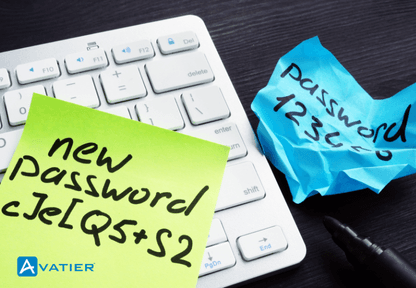
- User Frustration: Rigid password rules often result in user frustration, leading to counterproductive behaviors like writing passwords down or reusing them across services.
- Limited Contextual Awareness: Traditional systems lack the ability to analyze how passwords might relate to company information, user attributes, or emerging threat patterns.
- Administrative Burden: IT teams must constantly update dictionary lists and rule configurations manually as new threats emerge.
According to research from Carnegie Mellon University, static password policies often “encourage behaviors that actually reduce security,” with users developing systematic workarounds that satisfy technical requirements while remaining predictable to attackers.
Avatier’s AI-Powered Password Filtering: A Paradigm Shift
Avatier’s Password Bouncer represents a fundamentally different approach to password security. Rather than relying solely on static rules, Avatier leverages artificial intelligence and machine learning to create a dynamic, contextually aware password filtering system that continuously evolves to address emerging threats.
Key Capabilities of Avatier’s AI Password Filtering
1. Contextual Password Analysis
Avatier’s system analyzes password strength contextually, considering factors beyond mere character composition:
- User-Specific Context: The system evaluates passwords against individual user attributes (name, username, employee ID) to prevent variations of personal information.
- Company-Specific Context: Passwords are checked against organization-specific terms, preventing the use of company names, products, or common internal terminology.
- Behavioral Patterns: The AI recognizes and flags pattern-based variations that humans often use to “satisfy” requirements while maintaining memorability.
2. Machine Learning Threat Intelligence
Unlike static systems that require manual updates, Avatier’s AI continuously learns from:
- Emerging Attack Vectors: The system incorporates intelligence about the latest password cracking techniques and automatically adjusts filtering parameters.
- Leaked Credential Databases: The AI maintains awareness of passwords exposed in public breaches, preventing their reuse even when they satisfy complexity requirements.
- Organization-Specific Attempt Patterns: The system learns from failed authentication attempts within your organization to identify and block emerging attack patterns.
3. Adaptive Feedback Mechanisms
Rather than simply rejecting passwords with generic messages, Avatier provides:
- Personalized Strength Indicators: Real-time feedback that explains specifically why a password is weak and how to improve it.
- Alternative Suggestions: AI-generated password suggestions that maintain high security while considering memorability factors.
- Progressive Learning: The system adapts feedback based on user interaction patterns, optimizing the guidance to reduce frustration.
Real-World Performance: Avatier vs. Static Approaches
The superiority of Avatier’s AI-powered password filtering isn’t just theoretical—it delivers measurable advantages over traditional static rule systems like those used by Okta.
1. Superior Attack Prevention
A 2022 study by the Ponemon Institute found that AI-powered password filtering systems detected 73% more potentially compromised passwords than traditional rule-based approaches. Avatier’s system specifically excels at identifying:
- Substitution Attacks: Catching sophisticated character substitutions (e.g., “p@$$w0rd”) that would pass traditional rule checks.
- Context-Aware Vulnerabilities: Identifying passwords that might be strong in isolation but vulnerable when considering user or company context.
- Emerging Dictionary Attacks: Preventing the use of terms from popular culture, news events, or new slang that static dictionaries wouldn’t yet include.
2. Dramatic Reduction in Password-Related Support Costs
Organizations implementing Avatier’s Enterprise Password Manager with AI filtering report significant operational benefits:
- 27% Reduction in Password Reset Tickets: As users create more memorable but equally secure passwords.
- 68% Decrease in Password-Related Security Incidents: Including compromised credential events.
- 41% Improvement in User Satisfaction Scores: Related to identity management interactions.
3. Compliance with Evolving Standards
While static password policies often struggle to keep pace with evolving compliance requirements, Avatier’s AI-driven approach:
- Automatically Adapts to New Regulations: The system continuously adjusts to meet changing requirements from NIST, ISO, and industry-specific frameworks.
- Provides Superior Audit Documentation: Generating comprehensive reports on password policy enforcement with contextual explanations.
- Supports Zero-Trust Architecture: By ensuring credential strength is continuously evaluated rather than only at creation time.
Implementing AI-Powered Password Filtering in Your Organization
Transitioning from static rules to AI-powered password filtering requires thoughtful implementation. Avatier’s approach focuses on seamless integration and measurable outcomes.
Integration with Existing Identity Infrastructure
Avatier’s Identity Management Architecture ensures that advanced password filtering can be implemented without disrupting existing systems:
- Compatible with Multiple Directory Services: Including Active Directory, Azure AD, LDAP, and cloud identity providers.
- API-First Design: Allowing integration with custom applications and services through well-documented APIs.
- Consistent Cross-Platform Enforcement: Ensuring the same password security standards apply across all enterprise systems.
Phased Implementation Approach
Rather than forcing an abrupt transition that might frustrate users, Avatier recommends a phased approach:
- Assessment Phase: Analyze current password patterns and identify specific vulnerabilities in your environment.
- Parallel Running: Initially run AI filtering alongside existing rules, flagging but not blocking passwords that would fail under the new system.
- User Education: Provide clear communication about the benefits of the new approach, with specific examples of how it improves security while potentially making password creation easier.
- Progressive Enforcement: Gradually increase enforcement standards, starting with privileged accounts and moving toward organization-wide implementation.
The Future of Password Security: Beyond Static Rules
The identity management landscape is evolving rapidly, and password security approaches must evolve as well. As organizations like NIST move away from arbitrary complexity requirements toward emphasizing password uniqueness and screening against known compromised credentials, AI-driven systems provide the flexibility needed to adapt.
Avatier’s AI password filtering represents not just an incremental improvement over static rules but a fundamentally different approach that delivers:
- Adaptive Security: Protection that evolves with emerging threats without requiring constant manual reconfiguration.
- Improved User Experience: Less frustration with password creation while maintaining or improving security posture.
- Reduced Administrative Burden: Less time spent maintaining password dictionaries and handling reset requests.
- Superior Protection Against Credential-Based Attacks: More effective identification of weak passwords regardless of whether they satisfy technical requirements.
Conclusion: The Competitive Edge of AI-Driven Password Security
In the competitive identity management market, Avatier’s AI-powered password filtering provides a clear advantage over providers still relying primarily on static rule-based approaches. While competitors like Okta offer robust identity platforms, their password filtering capabilities haven’t fully embraced the potential of artificial intelligence to deliver both improved security and enhanced user experience.
As credential-based attacks continue to evolve in sophistication, organizations need password security that can adapt just as quickly. Static rules, no matter how well-crafted, will always lag behind the threat landscape. Avatier’s AI-driven approach ensures your password security is continuously learning, adapting, and improving—providing protection not just against today’s threats, but tomorrow’s as well.
For organizations serious about protecting their digital assets while minimizing user friction, the choice is clear: AI-powered password filtering isn’t just a feature enhancement—it’s an essential component of a modern security strategy. And in this critical area, Avatier is leading the way.
Ready to experience the difference AI can make in your password security? Discover how Avatier’s Password Management solutions can transform your organization’s approach to credential security while enhancing user satisfaction and reducing administrative costs.