December 3, 2025 • Mary Marshall
Password Complexity vs Password Strength: What Really Matters for Enterprise Security
Discover why password strength your security. Learn how AI-driven tools and password management strategies protect your organization.
The humble password remains both a critical vulnerability and the first line of defense for enterprise security. Yet many organizations continue to focus on outdated password complexity requirements while overlooking the more crucial factor: actual password strength.
The Password Paradox: When Complex Doesn’t Equal Strong
For decades, security professionals have preached the gospel of password complexity: a combination of uppercase and lowercase letters, numbers, and special characters. These requirements have become so ingrained in corporate policy that they’re practically universal. But here’s the uncomfortable truth: complexity rules often create passwords that are difficult for humans to remember but surprisingly easy for machines to crack.
Consider these two passwords:
- P@ssw0rd!123
- correct horse battery staple
The first example meets typical complexity requirements—uppercase, lowercase, numbers, and special characters. The second is just four common words strung together. Which is stronger? Counterintuitively, the second password contains significantly more entropy (randomness) and would take substantially longer to crack in a brute force attack, despite lacking the “complexity” markers of the first.
Why Password Complexity Requirements Fall Short
There are several fundamental flaws with traditional complexity requirements:
1. Predictable Patterns
When forced to create complex passwords, users tend to follow predictable patterns:
- Capitalizing the first letter
- Adding numbers at the end (typically “123” or the current year)
- Substituting letters with similar-looking symbols (a → @, i → !, e → 3)
These patterns are well-known to attackers and their cracking algorithms.
2. The Human Factor
Complex passwords that don’t follow natural language patterns are difficult to remember, leading to problematic user behaviors:
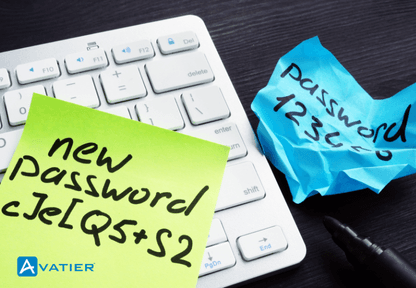
- Writing passwords down
- Reusing passwords across multiple systems
- Making minimal changes when forced to update (Password1! becomes Password2!)
- Frequently requesting password resets, increasing help desk costs
According to a study by Forrester Research, each password reset request costs organizations between $70-$100 in IT support resources—a significant operational burden for large enterprises.
3. False Sense of Security
Password complexity requirements can create a false sense of security. Organizations implement them to check a compliance box without addressing the underlying issue: actual password vulnerability to modern attack methods.
What Really Matters: Password Strength
Password strength is fundamentally about entropy—the randomness or unpredictability of a password, which directly correlates to how difficult it is to crack through brute force methods. Several factors determine genuine password strength:
1. Length
Password length is the single most important factor in determining strength. Every additional character exponentially increases the number of possible combinations an attacker must try. A 16-character password composed of just lowercase letters is typically stronger than an 8-character password with mixed case, numbers, and symbols.
2. Uniqueness
A password’s strength is instantly reduced to zero if it’s been compromised in previous data breaches. This is why checking new passwords against databases of known compromised credentials has become a critical security practice.
3. Randomness
True randomness is difficult for humans to generate but crucial for password strength. This is where technological solutions, like password managers with strong random generation capabilities, become essential.
Modern Password Management for Enterprise Security
Forward-thinking organizations are adopting more sophisticated approaches to password security that focus on strength rather than arbitrary complexity:
1. Implement Intelligent Password Validation
Tools like Avatier’s Password Bouncer go beyond basic complexity checks to validate password strength based on advanced algorithms. Password Bouncer evaluates passwords against:
- Known compromised password databases
- Dictionary words and common substitutions
- Context-specific terms (company name, username, etc.)
- True entropy measurements
This approach blocks truly weak passwords while allowing strong but memorable options that might not meet traditional complexity requirements.
2. Embrace Multi-Factor Authentication (MFA)
Even the strongest password is vulnerable if it’s the only authentication factor. Implementing MFA solutions substantially increases security by requiring additional verification beyond just the password.
According to Microsoft, MFA can block over 99.9% of account compromise attacks, making it one of the most effective security controls available.
3. Adopt Self-Service Password Management
Self-service password management solutions like Avatier’s Password Management reduce the operational burden of password resets while improving security through:
- Automated policy enforcement
- Secure reset methods
- Comprehensive audit trails
- Integration with identity governance frameworks
These solutions transform password management from a resource drain to a security enhancement.
4. Consider Passphrase Policies
Some forward-thinking organizations are moving to passphrase policies that encourage longer, more memorable combinations of words rather than complex strings of random characters. This approach increases both security and usability.
The Zero Trust Approach to Password Management
In a zero trust security framework, passwords are just one element in a comprehensive approach to identity and access management. Effective enterprise password management must be integrated with:
- Identity Lifecycle Management: Ensuring that access credentials are properly created, maintained, and deprovisioned as users move through the organization.
- Access Governance: Regularly reviewing who has access to what systems and why, regardless of their password strength.
- Continuous Authentication: Moving beyond point-in-time authentication to systems that continuously verify user identity based on behavior and context.
- Risk-Based Access Controls: Adapting authentication requirements based on the sensitivity of resources and detected risk factors.
AI and the Future of Password Security
Artificial intelligence is transforming both sides of the password security equation. Attackers increasingly use machine learning to refine password cracking techniques, while defenders leverage AI to:
- Detect unusual login patterns that might indicate compromised credentials
- Analyze password strength with greater sophistication
- Identify high-risk users who might benefit from additional security awareness training
- Automatically adjust authentication requirements based on risk profiles
Organizations implementing AI-driven identity management are seeing dramatic improvements in both security posture and operational efficiency.
Best Practices for Enterprise Password Security
To move beyond outdated complexity requirements toward truly effective password security:
- Focus on minimum length rather than complexity: Require at least 12 characters, with longer passwords encouraged.
- Check against compromised password databases: Ensure new passwords haven’t already been exposed in data breaches.
- Implement contextual password rules: Block passwords containing usernames, company names, or dictionary words with simple substitutions.
- Enable MFA everywhere possible: Particularly for admin accounts, remote access, and sensitive data access.
- Provide password managers: Give users tools to generate and store strong, unique passwords for each service.
- Monitor for credential compromise: Use dark web monitoring services to detect when corporate credentials appear in breach data.
- Audit password policies regularly: Review password requirements against current threat models and adjust accordingly.
- Integrate with identity governance: Ensure password management is part of a comprehensive access governance strategy.
Compliance Considerations
While transitioning to strength-based password policies, organizations must still navigate compliance requirements that often specify complexity. The good news is that most regulatory frameworks are evolving to recognize the importance of password strength over arbitrary complexity rules.
For industries with specific compliance requirements:
- Healthcare: HIPAA compliance requires appropriate authentication but doesn’t mandate specific complexity rules.
- Financial Services: SOX compliance focuses on access controls and separation of duties rather than specific password formats.
- Federal Agencies: NIST 800-53 has moved away from arbitrary complexity requirements toward a more holistic view of authentication strength.
Working with a provider experienced in compliance management can help organizations implement password policies that satisfy both security best practices and regulatory requirements.
Conclusion: Strength Over Complexity
The most secure password policies prioritize actual password strength over arbitrary complexity requirements. By focusing on length, uniqueness, and contextual factors rather than character composition alone, organizations can significantly improve their security posture while reducing the usability friction that drives risky user behaviors.
As cyber threats continue to evolve, password management must evolve as well. Forward-thinking organizations are moving beyond complexity checkboxes to implement intelligent, risk-based approaches to authentication that better protect their critical assets while improving the user experience.
By implementing tools like Password Bouncer and adopting a comprehensive approach to identity management, enterprises can transform password security from a vulnerability into a strength—ensuring that this fundamental security control remains effective even as attack methodologies become increasingly sophisticated.