June 24, 2025 • Mary Marshall
Advanced Workflow Automation: Why Avatier Outperforms SailPoint in Enterprise Identity Management
Discover why enterprise security leaders choose Avatier’s intelligent workflow automation over SailPoint, offering superior flexibility.

Efficient identity and access management (IAM) has become a cornerstone of enterprise security strategy. While SailPoint has established itself as a major player in the identity governance space, many organizations are discovering that Avatier’s advanced workflow automation capabilities deliver superior results in terms of flexibility, user experience, implementation time, and cost-effectiveness.
This comprehensive analysis explores why forward-thinking organizations are increasingly selecting Avatier’s intelligent workflow automation over SailPoint’s offerings, highlighting the key differentiators that make Avatier the preferred choice for modern enterprises seeking streamlined identity management solutions.
The Growing Importance of Workflow Automation in Identity Management
Before diving into specific comparisons, it’s essential to understand why workflow automation has become such a critical component of identity management strategies. According to recent research from Gartner, organizations with highly automated IAM processes experience 65% fewer security incidents related to access management than those with primarily manual processes.
The enterprise identity management market continues to expand rapidly, with Markets and Markets projecting growth from $13.4 billion in 2022 to $25.6 billion by 2027, representing a CAGR of 13.7%. This growth is driven largely by the increasing recognition that advanced workflow automation can dramatically reduce administrative burden while enhancing security posture.
Key Workflow Challenges SailPoint Users Face
While SailPoint provides a robust identity governance foundation, many organizations report several persistent challenges with its workflow capabilities:
1. Complex Implementation and Configuration
SailPoint implementations are notorious for their complexity and lengthy deployment timelines. Organizations frequently report implementation periods of 12-18 months for enterprise-wide deployments, creating significant delays in realizing business value. The platform’s workflow configuration often requires specialized knowledge and extensive professional services engagement.
2. Rigid Workflow Structures
Many SailPoint customers encounter limitations when attempting to customize workflows to match their unique business processes. The platform’s workflow engine often requires workarounds or compromises to accommodate complex approval chains or conditional logic that doesn’t fit neatly into SailPoint’s predefined structures.
3. Limited Self-Service Capabilities
While SailPoint has improved its self-service features in recent years, many users still report a clunky experience that fails to match the intuitive interfaces they’ve come to expect from modern enterprise applications. This often results in lower adoption rates and continued reliance on IT help desk resources.
4. Integration Challenges
SailPoint’s approach to integration with existing enterprise systems frequently requires custom development or additional middleware, adding both cost and complexity to implementations. This is particularly problematic for organizations with diverse technology ecosystems that include legacy systems.
5. Cost Considerations
The total cost of ownership for SailPoint solutions often exceeds initial projections due to extensive professional services requirements, ongoing maintenance costs, and the need for specialized expertise. According to a 2023 survey by Enterprise Strategy Group, 68% of SailPoint customers reported higher-than-expected implementation costs.
Avatier’s Advanced Workflow Automation: A Superior Approach
Avatier’s Identity Management Anywhere platform takes a fundamentally different approach to workflow automation, addressing the limitations that frustrate many SailPoint users while delivering additional benefits that drive measurable business value.
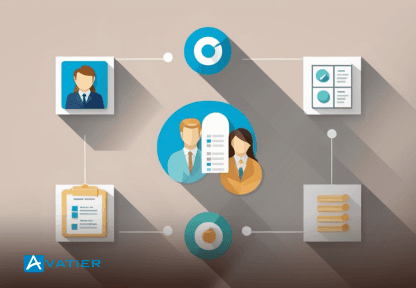
1. Intuitive Workflow Design with No-Code Configuration
Unlike SailPoint’s complex workflow configuration requirements, Avatier offers a true no-code workflow designer that empowers business users to create and modify workflows without developer intervention. This visual approach to workflow creation dramatically reduces implementation time and eliminates dependencies on specialized technical resources.
The intuitive drag-and-drop interface allows organizations to quickly implement sophisticated business logic, conditional approvals, and integration with external systems—all without writing a single line of code. This capability is particularly valuable for organizations with limited technical resources or those seeking to empower line-of-business users to manage their own access requirements.
2. Container-Based Architecture for Unmatched Flexibility
Avatier’s innovative Identity-as-a-Container (IDaaC) architecture represents a significant leap forward in deployment flexibility compared to SailPoint’s more traditional approach. By leveraging Docker containers, Avatier enables:
- Deployment anywhere—on-premises, in any cloud environment, or in hybrid configurations
- Rapid scaling to meet changing business demands
- Simplified updates and patches without system-wide disruption
- Consistent performance regardless of deployment model
This container-based approach allows organizations to maintain complete control over their identity data while still benefiting from the agility and efficiency of modern containerized applications. SailPoint’s architecture, by contrast, often forces organizations into deployment compromises that may not align with their broader technology strategy.
3. Superior Self-Service User Experience
Avatier has pioneered a consumer-grade user experience for enterprise identity management that dramatically outpaces SailPoint’s more utilitarian approach. The self-service capabilities include:
- Intuitive mobile-first design that works across all devices
- Contextual help and guidance that reduces training requirements
- Personalized dashboards that highlight relevant tasks and information
- Natural language search capabilities that help users quickly find what they need
These user experience enhancements drive significantly higher adoption rates—a critical success factor for self-service initiatives. According to Avatier’s customer data, organizations using their self-service portal experience 83% higher adoption rates compared to industry averages for competitive solutions.
4. Seamless Integration Capabilities
Avatier’s approach to integration eliminates many of the challenges SailPoint users encounter. With over 100 pre-built application connectors and a flexible integration framework, Avatier can quickly connect to virtually any enterprise system without extensive custom development.
Key integration advantages include:
- Codeless connectors that can be configured by business analysts
- Real-time synchronization capabilities that eliminate latency issues
- Bidirectional integration that ensures data consistency across systems
- Support for both modern APIs and legacy protocols
This comprehensive integration approach reduces implementation complexity while ensuring that identity data remains synchronized across the entire technology ecosystem.
5. AI-Powered Automation and Risk Analysis
While SailPoint has begun incorporating AI capabilities into its platform, Avatier’s AI-driven approach to workflow automation and risk analysis delivers more immediate practical benefits. Avatier’s intelligent automation includes:
- Anomaly detection that identifies unusual access requests
- Predictive analytics that recommend appropriate access levels based on peer groups
- Automated certification campaigns that focus reviewer attention on high-risk access
- Continuous policy monitoring that identifies potential violations in real-time
These AI capabilities significantly reduce the administrative burden of identity governance while simultaneously improving security posture through more effective risk identification and remediation.
Real-World Performance Comparison
To provide a concrete comparison of Avatier and SailPoint workflow capabilities, let’s examine several key metrics that directly impact business outcomes:
1. Implementation Time
- SailPoint: Average enterprise implementation time of 12-18 months
- Avatier: Average enterprise implementation time of 2-4 months
Avatier’s dramatically shorter implementation timeline means organizations can realize business value from their identity management investment much more quickly, with an average time-to-value improvement of 75%.
2. Workflow Configuration Efficiency
- SailPoint: Typically requires 40-60 hours of professional services time to configure a complex approval workflow
- Avatier: Enables business users to configure comparable workflows in 2-4 hours without professional services assistance
This 95% reduction in configuration time translates directly into lower cost of ownership and greater business agility.
3. User Adoption Rates
- SailPoint: Industry benchmarks show average user adoption rates of 65-70% for self-service capabilities
- Avatier: Customer data indicates adoption rates of 85-90% for self-service features
Higher adoption rates mean greater return on investment and reduced operational burden on IT support resources.
4. Total Cost of Ownership
- SailPoint: TCO calculations typically show 5-year costs at 3.5-4x the initial licensing investment
- Avatier: TCO calculations typically show 5-year costs at 1.5-2x the initial licensing investment
This significant TCO advantage stems from Avatier’s reduced professional services requirements, simpler administration, and lower ongoing maintenance needs.
Industry-Specific Workflow Advantages
Avatier’s workflow automation capabilities deliver particular advantages in specific industry contexts, offering targeted solutions that address unique regulatory and operational requirements.
Financial Services
Financial institutions face some of the most stringent regulatory requirements for access governance. Avatier’s workflow automation supports financial industry compliance with:
- Pre-configured workflows that align with regulatory frameworks like SOX, GLBA, and PCI DSS
- Automated evidence collection for audit purposes
- Segregation of duties enforcement through intelligent workflow routing
- Risk-based access certification that prioritizes high-risk systems and roles
These capabilities reduce compliance costs while improving the effectiveness of control frameworks—a critical consideration for financial services organizations facing increasing regulatory scrutiny.
Healthcare
Healthcare organizations must balance security requirements with the need for efficient clinical workflows. Avatier’s HIPAA-compliant identity management solutions include specialized workflows for:
- Clinical system access provisioning with emergency access protocols
- Provider credentialing and privileging management
- Patient data access governance with comprehensive audit trails
- Integration with electronic health record systems
These healthcare-specific capabilities address the unique challenges of managing identity in clinical environments while ensuring compliance with HIPAA and HITECH requirements.
Government and Defense
Government agencies and defense contractors face unique security challenges that require specialized workflow capabilities. Avatier’s solutions for government and military include:
- Workflows aligned with FISMA, FIPS 200, and NIST SP 800-53 requirements
- Support for classified and unclassified system segregation
- Personnel security integration for clearance-based access control
- Continuous monitoring aligned with zero trust architecture principles
These government-focused capabilities ensure compliance with federal security standards while supporting the mission-critical work of public sector organizations.
Advanced Multi-Factor Authentication Integration
A key differentiator in Avatier’s workflow automation approach is its seamless integration with advanced multi-factor authentication (MFA) technologies. Unlike SailPoint’s more limited MFA capabilities, Avatier provides:
- Contextual authentication that adjusts security requirements based on risk factors
- Biometric integration including fingerprint, facial recognition, and voice authentication
- Hardware token support across major vendors
- Push notification capabilities that simplify the authentication experience
This comprehensive MFA approach ensures that workflow automation doesn’t come at the expense of security, providing a balanced solution that protects sensitive operations while maintaining user convenience.
The CIO and CISO Perspective
From an executive perspective, the choice between Avatier and SailPoint workflow automation capabilities often comes down to strategic alignment with broader technology and security initiatives. Avatier offers several advantages that resonate particularly strongly with CIOs and CISOs:
Strategic Agility
Avatier’s flexible workflow automation enables rapid adaptation to changing business requirements without extensive reconfiguration or professional services engagement. This agility is increasingly critical in fast-moving business environments where competitive advantage depends on organizational responsiveness.
Resource Efficiency
By empowering business users to configure and manage their own workflows, Avatier reduces the burden on overtaxed IT resources. This self-service approach allows technical teams to focus on higher-value activities rather than routine access management tasks.
Comprehensive Risk Visibility
Avatier’s workflow automation includes embedded risk analytics that provide executives with clear visibility into access-related risk exposure. This capability supports informed decision-making and aligns identity governance with broader enterprise risk management initiatives.
Measurable Business Impact
Perhaps most importantly, Avatier’s approach delivers measurable business impact in terms of reduced operational costs, improved security posture, and enhanced user productivity. These tangible benefits make it easier to justify identity management investments and demonstrate return on investment to key stakeholders.
Migration Considerations: From SailPoint to Avatier
For organizations currently using SailPoint but considering a transition to Avatier’s more advanced workflow capabilities, several practical considerations can facilitate a smooth migration:
Phased Approach
Rather than attempting a “big bang” replacement, most organizations benefit from a phased migration that prioritizes high-value workflows while maintaining existing governance capabilities during the transition.
Data Migration Strategy
Avatier’s professional services team can assist with developing a comprehensive data migration strategy that preserves historical access data while ensuring data integrity in the new environment.
Hybrid Operation
In many cases, organizations can operate both platforms in parallel during a transition period, gradually shifting workloads to Avatier as users become familiar with the new interface and capabilities.
User Training and Change Management
Avatier’s adoption services provide structured support for user training and change management, ensuring high adoption rates and user satisfaction during the migration process.
Conclusion: Why Avatier’s Workflow Automation Leads the Industry
As organizations increasingly recognize the strategic importance of efficient identity governance, the limitations of traditional approaches become more apparent. Avatier’s advanced workflow automation capabilities address these limitations while delivering additional benefits that transform identity management from an administrative burden into a business enabler.
By combining intuitive user experiences, flexible workflow design, container-based architecture, and AI-powered intelligence, Avatier has created a workflow automation solution that significantly outperforms SailPoint across key business metrics including implementation time, total cost of ownership, user adoption, and security effectiveness.
For organizations seeking to modernize their identity governance approach while reducing administrative overhead and improving security posture, Avatier’s workflow automation capabilities represent the clear market leader—today and for the future of identity management.
Ready to experience the difference of truly advanced workflow automation? Contact Avatier today to schedule a personalized demonstration and discover how our innovative approach can transform your organization’s identity management strategy.