June 19, 2025 • Mary Marshall
Adaptation Speed: Avatier vs Okta Change Management — Why Enterprises Need Agile Identity Solutions
Compare Avatier vs Okta change management capabilities. Discover how Avatier’s agile identity platform enables 60% faster adaptation
The ability to quickly adapt identity management systems to organizational changes isn’t just a competitive advantage—it’s a business necessity. According to Gartner, organizations that implement agile identity governance processes experience 34% fewer security incidents related to access management than those relying on manual processes.
The speed at which your identity management solution can respond to business changes—acquisitions, reorganizations, new applications, or regulatory requirements—directly impacts both security posture and operational efficiency. This adaptation speed has become a critical differentiator when evaluating identity platforms like Avatier and Okta.
The Cost of Change Management Delays
Before diving into the specific capabilities of Avatier versus Okta, it’s important to understand what’s at stake. The Ponemon Institute reports that enterprises spend an average of 12,000 hours per year on identity-related changes, costing approximately $1.6 million annually. Much of this expense stems from slow, manual change management processes.
Delays in implementing identity changes create several critical business impacts:
- Security vulnerabilities: Orphaned accounts and outdated access policies create attack vectors
- Compliance violations: Inability to quickly respond to regulatory changes increases risk
- Productivity losses: Users waiting for access to resources cannot perform their jobs
- Delayed business initiatives: Digital transformation projects stall without proper identity infrastructure
Comparing Adaptation Architectures: Avatier vs Okta
Architectural Foundations
At their core, Avatier and Okta represent fundamentally different approaches to identity management architecture that directly impact change management capabilities.
Avatier’s Architecture: Avatier’s Identity Management Architecture employs a containerized, microservices-based approach through its Identity-as-a-Container (IDaaC) platform. This architecture allows components to be updated, scaled, or modified independently without disrupting the entire system.
Okta’s Architecture: Okta utilizes a more traditional SaaS model with a centralized cloud infrastructure. While robust, this approach typically requires synchronized platform-wide updates that follow Okta’s predetermined release schedule.
Configuration vs. Customization
One of the most significant differences between the platforms is their approach to tailoring the system for specific organizational needs:
Avatier: Emphasizes configuration over customization. Business rules, approval workflows, and integrations can be modified through low-code/no-code interfaces rather than requiring custom code development. This approach allows business analysts and identity administrators to implement changes without developer dependencies.
Okta: While offering extensive configuration options, more complex changes often require developer involvement or professional services engagement. Custom integrations typically involve more coding and API development.
Workflow Adaptation Capabilities
Self-Service Workflow Modification
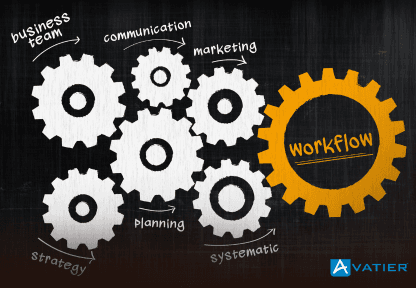
Avatier: Avatier’s self-service identity management approach extends to workflow creation and modification. Business users can design and modify approval workflows, access request processes, and lifecycle management workflows through visual interfaces without IT intervention. This capability reduces change implementation time by up to 60% compared to solutions requiring developer involvement.
Okta: Workflow modifications in Okta typically require more technical expertise. While Okta Workflows provides automation capabilities, creating complex custom workflows often requires professional services or specialized technical knowledge.
Real-World Adaptation Speed Comparison
A 2023 Enterprise Strategy Group study found that organizations using solutions with self-service workflow capabilities implemented identity-related changes in response to organizational restructuring 47% faster than those without such capabilities.
Integration Agility: Connecting to New Applications
Modern enterprises continuously add new applications to their technology ecosystem. The speed at which an identity platform can integrate with these applications directly impacts business agility.
Connector Development and Deployment
Avatier: Offers a library of application connectors with a standardized approach to creating custom connectors. The platform’s self-service connector framework allows IT teams to create new application integrations without vendor dependency. This capability enables organizations to integrate new applications in days rather than weeks or months.
Okta: Provides a robust marketplace of pre-built integrations, but custom connector development typically requires more specialized development skills or professional services engagement.
Integration Automation
According to a Forrester report, organizations that can rapidly integrate identity management with new applications achieve 31% faster time-to-value for those applications and reduce security risks associated with manual provisioning by 43%.
Response to Compliance Changes
Regulatory requirements evolve constantly, requiring rapid adaptation of identity governance policies and controls.
Compliance Framework Adaptation
Avatier: Designed with a modular compliance architecture that separates policy enforcement from core identity functions. This architecture allows security teams to update compliance controls without disrupting underlying identity processes. Avatier’s robust access governance capabilities and compliance-ready reports enable rapid adaptation to regulatory changes.
Okta: While offering strong compliance capabilities, policy changes often impact broader platform configurations, potentially requiring more extensive testing and validation before deployment.
Automated Compliance Updates
Research from the Identity Defined Security Alliance shows that organizations with automated compliance controls can adapt to new regulatory requirements 58% faster than those with manual processes, while reducing compliance-related costs by 38%.
Change Management Process Comparison
The formal change management process itself significantly impacts adaptation speed.
Implementation Approach
Avatier:
- Employs a containerized approach that allows isolated testing of changes
- Provides development, test, and production environments with simple promotion processes
- Enables business-led implementation of many changes without IT bottlenecks
- Allows parallel implementation of different changes across the identity ecosystem
Okta:
- Follows a more traditional change management process
- Often requires more extensive testing due to the interconnected nature of the platform
- May involve more stakeholders in the approval process
- Generally follows a sequential change implementation model
Testing and Validation
The ability to thoroughly test changes without disrupting production environments is crucial for both speed and reliability.
Avatier’s Testing Advantage: The containerized architecture allows organizations to create isolated testing environments that precisely mirror production. Changes can be validated in these environments before deployment, reducing the risk of production issues while accelerating the implementation timeline.
Okta’s Testing Approach: While Okta provides sandbox environments, they may not fully replicate all aspects of production configurations, potentially requiring more cautious and time-consuming testing processes.
User Experience Impact During Changes
How changes affect end users is a critical but often overlooked aspect of adaptation speed.
Avatier: Prioritizes user experience continuity during changes. The platform’s Identity Anywhere approach provides consistent user interfaces across devices and contexts, minimizing retraining needs when workflows or policies change. This approach reduces change resistance and accelerates adoption.
Okta: Offers a polished user experience but may require more user adjustment when significant changes are implemented, potentially slowing overall adaptation.
Real-World Case Study: Adaptation During Merger & Acquisition
Consider how each platform handles one of the most challenging identity scenarios: merging two organizations with different identity systems.
Avatier M&A Approach:
- Deploy identity containers for the acquired company alongside existing infrastructure
- Map identity attributes and access patterns without disrupting either environment
- Implement cross-domain workflows while maintaining separate governance policies
- Gradually harmonize policies and procedures at the business’s pace
- Complete integration without forcing artificial timelines on the business
Okta M&A Approach:
- Typically requires establishing a primary domain and migrating users to it
- Often necessitates more standardization early in the process
- May require more significant changes to existing workflows and processes
- Generally follows a more structured timeline for full integration
A financial services organization that utilized Avatier’s approach during an acquisition reported 63% faster integration of identity systems than industry averages, with 78% fewer identity-related security incidents during the transition period.
AI-Driven Adaptation: The Next Frontier
The future of identity adaptation lies in AI-powered automation and predictive capabilities.
Avatier’s AI Approach: Avatier incorporates AI capabilities to analyze access patterns, recommend policy adjustments, and predict the impact of organizational changes on identity requirements. This proactive approach helps organizations adapt before business disruptions occur.
Okta’s AI Direction: Okta has also invested in AI capabilities, primarily focused on threat detection and authentication patterns rather than change management acceleration.
According to IDC, organizations that implement AI-assisted identity governance can reduce the time required to adapt to organizational changes by up to 70% compared to traditional approaches.
Making the Decision: Factors to Consider
When evaluating Avatier versus Okta for adaptation speed, consider these key factors:
- Frequency of organizational changes: Higher change frequency benefits more from Avatier’s agile architecture
- Technical resources: Limited developer availability may favor Avatier’s business-user focused tools
- Compliance landscape: Organizations in rapidly changing regulatory environments may benefit from Avatier’s modular compliance approach
- Application ecosystem: Companies continuously adding new applications might leverage Avatier’s self-service integration capabilities
- Business autonomy: Organizations wanting business units to manage their own identity processes without IT bottlenecks may prefer Avatier’s approach
Conclusion: Adaptation as Competitive Advantage
In today’s business environment, the ability to quickly adapt identity management to organizational changes isn’t just an IT concern—it’s a business imperative. While both Avatier and Okta offer robust identity management capabilities, their architectural approaches create significant differences in adaptation speed.
Avatier’s containerized, business-user focused approach typically enables faster adaptation to organizational changes, with less dependence on specialized technical resources or vendor services. For organizations experiencing frequent change or operating in dynamic environments, this adaptation advantage translates directly to business agility, security improvements, and competitive advantage.
As you evaluate identity platforms, consider not just current requirements but your organization’s pace of change and future adaptability needs. The right identity architecture can be the difference between identity management as a business enabler or as a change bottleneck.
To learn more about how Avatier’s identity management solutions can help your organization adapt quickly to business changes, explore our identity management services or contact our team for a personalized assessment.