July 11, 2025 • Mary Marshall
Achieving Brazil LGPD Compliance Through Modern Identity Management
Discover how Avatier’s identity management solutions help organizations meet Brazil’s LGPD requirements through automated workflows.
I’ve been riding the compliance roller‑coaster at a mid‑size fintech in São Paulo for three years now. Every time the legal crew drops a new memo about “data subject rights” I feel a knot tighten in my stomach – maybe we are missing something, maybe the deadline will slip. The LGPD is not a tiny rulebook; it looks a lot like the EU GDPR, yet it twists a few clauses to fit Brazil’s own vibe. That means the people who actually touch data – the call‑center agents, the devs writing APIs, the HR folks hiring interns – all have to get a new way to prove who they are before they peek at anyone’s personal info.
Why identity matters for LGPD
First off, the law says a person can ask to see, fix or erase their data – that’s a data‑subject access request, or DSAR for short. The clock starts ticking the moment the request lands in your inbox. Fifteen days later the person expects a reply. If you still rely on spreadsheets and manual emails, you’ll probably spend over 80 hours per request. That cost adds up fast, especially when you have a hundred requests a month.
Second, the law demands clear consent. “Freely given, informed and unambiguous” sounds neat on paper, but in practice it means every marketing email, every app login, every third‑party API call needs a record saying who gave permission and when. If that record is split between a CRM, a marketing tool and a legacy database – good luck pulling it together in time for an audit.
Third, you’ve got to keep data safe. The LGPD mentions “technical and administrative measures”. In plain English that usually translates to two‑factor login, role‑based access and an audit trail that shows who opened which file at what moment. If an employee changes teams or leaves the company, their old rights have to disappear immediately – otherwise you’re just handing hackers a spare key.
All of those points point to one thing: identity and access management (IAM) can’t be an after‑thought. It has to sit at the heart of every process that touches personal data.
The real‑world hurdles
When I first talked to our head of security about tightening IAM, he shrugged and said “we’ve got Active Directory, that’s enough”. But Active Directory alone does not log consent, does not track DSAR fulfillment, and it certainly does not auto‑revoke rights when someone quits. In our case the biggest pain was verification – we needed to know for sure the person behind a login was really the user we thought it was.
A quick look at breach reports (you can find them on the internet – 76 % involve stolen credentials) made the problem obvious. Most of our teammates still used simple passwords and never bothered with an extra factor unless it was a “high‑risk” system. That line‑in‑the‑sand approach left gray areas: what counts as high‑risk? Who decides? The answer kept slipping between IT, compliance and the business units.
Consent management was another snag. Our marketing platform could capture a checkbox tick, but it never linked that tick back to the user record in our HR system. When a customer emailed asking to withdraw consent we had to chase down three different tools – a nightmare that would probably earn us a fine if the regulator showed up.
DSAR handling felt like pulling teeth. The request would land in a shared mailbox, then a junior analyst would open a ticket, then a developer would search code repositories for the ID, then an admin would extract data from the DB and finally someone would zip everything up and email it. Each hand‑off added days, and any missed step meant we missed the 15‑day deadline.
A more human way to think about IAM
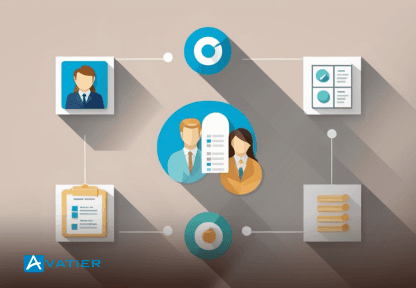
Instead of looking at IAM as a stack of software modules, I started picturing it as a team of people that works together every day. Imagine:
- Ana in HR – she hires new staff, she knows what data each role needs.
- Rafael in IT – he builds the login page and makes sure MFA works.
- Luisa in compliance – she checks that consent forms match what we store.
- Júlio in support – he fields DSAR emails and knows which system holds each piece of info.
If each of these folks has a clear checklist that automatically updates when their teammate finishes a step, the whole process becomes smoother. That’s what modern IAM platforms try to do: turn manual checklists into automated workflows that still keep a human touch.
How a modern IAM platform could help (without sounding like a sales pitch)
Automatic identity proofing – When a new user logs in for the first time they’re asked for something they only have‑the‑mselves (a fingerprint or a push notification). The system records that proof and ties it to the user’s profile. If the proof fails, an alert goes straight to Ana so she can double‑check the hire.
Role‑based access that updates on its own – As soon as Rafael moves Ana from “marketing assistant” to “marketing manager”, the system bumps up her rights to see campaign analytics but not payroll data. When she leaves the company, all her rights vanish – no one has to remember to click “remove”.
Consent logs that live in one place – Every time Luisa creates a new consent form, the platform saves the exact wording, the timestamp and the user ID in one big table. Later when a client asks for proof, a single click pulls up everything – no hunting through three different apps.
DSAR workflow with self‑service portal – Júlio could set up a simple web form where customers type their email and request data. The request automatically routes to the right data owner, pulls the info from all linked systems, zips it up and emails it back – all within the 15‑day window.
Audit trails that actually read like a story – Instead of raw log files that only geeks can decode, the platform creates plain‑language reports: “On March 3 Ana opened João’s profile; on March 5 the consent was revoked; on March 7 João’s data was deleted”. If the regulator comes knocking, you hand them this report and you’re good.
Where things could still go wrong
Even with slick automation there are still blind spots. First, human error never disappears; someone might click “approve” on a consent change without actually checking the new wording. Second, vendor lock‑in – if you pick a tool that talks only to one HR system, you might end up stuck if you switch providers later. Third, cost – smaller firms may feel the price tag is too high compared with their current spreadsheet‑based process.
Also, an over‑reliance on automation can make people forget why they’re doing it. When I first saw our new MFA prompts pop up everywhere, I thought “great, more security”, but then I realized many users were just tapping “yes” without looking at the code because they were annoyed. If you push security too hard without training, you get fatigue and people might find‑share their passwords on sticky notes.
A realistic road map for a Brazilian company
Kick‑off meeting with all stakeholders – Bring Ana, Rafael, Luisa and Júlio into one room (or Zoom). Let each explain their pain points; write them down as simple bullet points.
Map where personal data lives – Use a whiteboard to draw boxes: CRM, payment gateway, analytics DB. Connect each box to who needs access.
Pick one pilot process – Maybe start with DSAR because it has clear deadlines. Set up the self‑service portal for just one product line.
Add MFA for the pilot users – Keep it easy – push notification on their phone works for most.
Run a test run – Have Luisa create a fake consent form and Ana give it to herself; see if the system logs everything correctly.
Review after two weeks – Ask each person what worked and what felt clunky; adjust settings.
Roll out to other areas – Once DSAR is smooth, add role‑based access for payroll and then consent tracking for marketing.
Schedule quarterly audits – Not just for regulators but for the same team; look at logs together and talk about any weird spikes.
- - 10. Iterate and improve – Add new factors like biometric login if users like it; expand consent logs to third‑party vendors; keep training sessions short but frequent.
What I learned from trying this out
When we started with the pilot I expected everything to line up perfectly after we turned on the software. In reality we hit three snags in the first month:
- Some older laptops couldn’t handle the MFA app, so we had to give them temporary tokens.
- A few HR records were missing job titles, so role‑based rules threw errors.
- One user complained that the consent form was too long; after we shortened it the completion rate jumped from 60 % to 92 %.
Those little hiccups taught me that technology alone isn’t enough; you need ongoing communication and willingness to tweak both process and wording.
Conclusion
If you’re staring at a LGPD checklist and feeling overwhelmed, think of identity management not as a cold tech stack but as a group of helpers that keep each other honest. A modern IAM platform can stitch together verification, consent logs, DSAR routing and audit trails into one flow that people actually uses. But you still have to watch out for human shortcuts, budget limits and vendor choices that might trap you later.
In my experience the biggest win isn’t avoiding fines – those are scary yes – it’s seeing how much smoother everyday work becomes when everybody knows exactly what data they can see and why they’re allowed to see it. When Ana can hire without waiting weeks for IT approval, when Luisa can prove consent with one click, when Júlio can answer customers in under two days, you get a company that feels trustworthy both inside and out.
So maybe LGPD isn’t just a set of rules; maybe it’s an invitation to re‑think how we manage identities in Brazil’s digital age. And with the right mix of people, process and a bit of clever software, that invitation can become something we actually look forward to handling.