Automated User Provisioning Software
An IT service catalog with self-service user provisioning software and automated provisioning

Avatier identity management software allows you to automate user provisioning workflow based on roles, group memberships and business policies. Meet regulatory compliance requirements and better manage risks with fewer IT resources.
Avatier Offers:
- Rapid User Adoption
- 100% Self-Service Provisioning
- Build workflows fast with automation
- Implement Avatier yourself or with help from our service team
See It In Action today
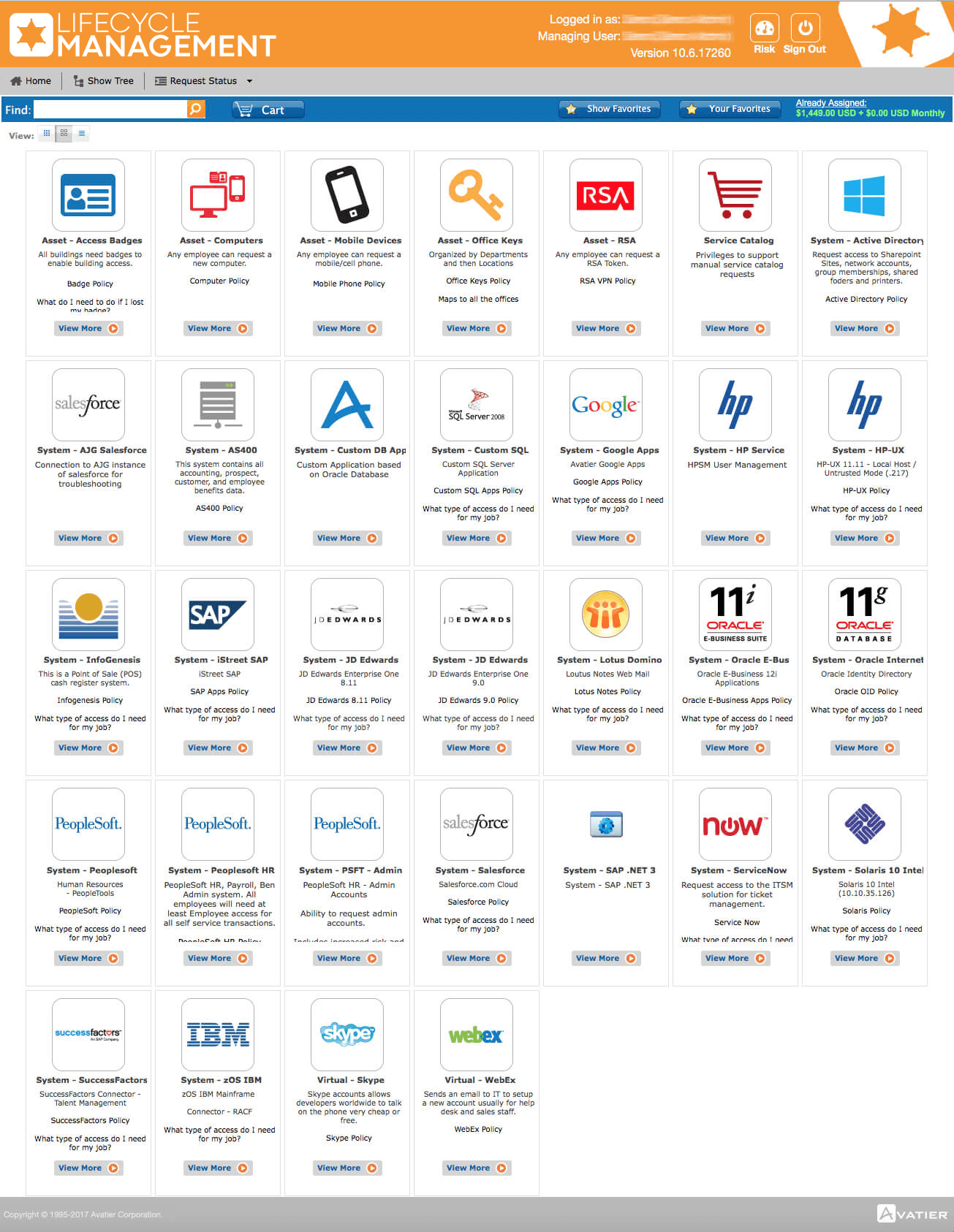
Self-Service & Automated Provisioning
Avatier’s user provisioning software features IT automation and business user self-service. The Avatier identity management suite (AIMS) includes Identity Enforcer for user account provisioning and Group Requester for self-service group management. Avatier’s user provisioning software ensures people have the right access to systems, subscriptions, facilities, assets, groups and assignments.

Identity Enforcer IT Service Catalog with User Provisioning Software
The world's first IT store for access management and security
Identity Enforcer gives you the flexibility to provide fully automated user provisioning, 100% self-service provisioning and every variation in between for new hires, transfers, terminations and the most common HR processes. With automated user provisioning software, you realize operational savings, remove time lags, enforce corporate policies and turn compliance management into a seamless function of your information security infrastructure.
Identity Enforcer removes the potential for human error through automated user provisioning and system approvals to deliver immediate business impact. Identity Enforcer simultaneously reduces enterprise risks from user errors, while enforcing budgets through asset budgeting, which works just like an individual allowance. With Identity Enforcer your employees, partners and consultants can ‘shop’ in your IT service catalog just like shopping online, while you track and receive alerts from built-in user provisioning software audit controls.
Avatier’s comprehensive application connectors give you a readily configurable user provisioning software that can be up and running in a matter of weeks rather than months. Avatier’s graphical and iconic interface lets business users directly request provisions within your company security policy. Identity Enforcer simplifies the user provisioning process through IT automation and an enhanced user experience to ensure a consistent and accurate ITIL service catalog user provisioning solution.

Group Requester Self-service Group Management Software
Self-service group management and group membership
Group Requester offers a self-service Active Directory group management software solution for performing AD group management administration. Group Requester streamlines group membership management and alleviates IT from such tasks. Avatier’s easy-to-use self-service group management software eliminates the time your IT team spends on Active Directory group management administration by empowering business users to create new groups, set a group expiration date, add members, change privileges and immediately remove access through automation and self-service administration.
With self-service group provisioning business users make changes to group memberships that are tracked through built-in information security software audit controls. Group Requester’s self-service graphical and iconic interface makes it easy to report on and meet identity management compliance mandates. Group Requester provides a seamless user experience by assigning responsibilities based on the rule based group management of data and roles originating from authoritative sources.
Self-service group management extends access control to business users and concurrently enforces enterprise policies to reduce identity and access governance risks. Group Requester lets you assign ownership of groups and distribution lists through the IT automation, group provisioning workflow and organizational roles. Group Requester allows business users to complete labor-intensive group management tasks on their own.