June 19, 2025 • Mary Marshall
Industry Leadership: Why Avatier Leads Innovation vs Okta
Discover how Avatier outpaces Okta with AI-driven identity management, containerized architecture, and seamless workflow automation

Enterprise leaders face critical decisions about which solutions will best secure their organizations while enabling productivity. While Okta has captured significant market share, forward-thinking security leaders are increasingly turning to Avatier for its innovative approach to identity management that addresses key limitations in legacy IAM systems.
The Evolving IAM Landscape: Why Innovation Matters
The identity management space has undergone dramatic transformation in recent years. According to Gartner, by 2025, 80% of enterprises will adopt a strategy for identity-first security, up from just 35% in 2020. This shift reflects the understanding that identity has become the new security perimeter in a cloud-first, remote-work world.
While Okta built its reputation on cloud-based single sign-on (SSO) and basic identity management, Avatier has developed a comprehensive, future-facing approach that addresses the full spectrum of modern IAM challenges. The contrast between these platforms reveals why innovation leadership matters to enterprise security teams.
Architectural Innovation: Containerization vs. Legacy SaaS
Avatier’s most revolutionary advancement comes in the form of its industry-first Identity-as-a-Container (IDaaC) architecture. This containerized approach represents a fundamental shift from traditional SaaS-based identity solutions like Okta.
Unlike Okta’s cloud-only architecture, Avatier’s containerized platform can be deployed anywhere – public cloud, private cloud, on-premises, or hybrid environments – while maintaining consistent functionality and security controls. This provides several critical advantages:
- Deployment Flexibility: IT teams can place identity containers in the environment that best meets their security and compliance requirements, rather than being forced into a vendor’s cloud.
- Data Sovereignty: With increasing global regulations around data residency, Avatier’s container architecture allows organizations to maintain control over where identity data resides.
- Scalability: Containers can scale horizontally to handle authentication spikes without performance degradation, a significant advantage over traditional architectures.
- Security Isolation: Each container provides isolation boundaries, limiting the impact of potential security incidents.
In contrast, Okta’s legacy SaaS architecture forces organizations to adapt to its deployment model rather than providing the flexibility modern enterprises need.
AI-Driven Identity Management: Beyond Basic Automation
While Okta has incorporated some basic machine learning capabilities, Avatier has embraced AI as a core component of its identity platform. This AI-driven approach transforms several key aspects of identity management:
- Intelligent Access Certification: Avatier’s platform uses pattern recognition to identify unusual access requests and prioritize high-risk reviews, reducing certification fatigue while improving security.
- Predictive Risk Scoring: The system continuously evaluates user behavior patterns to detect potential account compromise before security incidents occur.
- Automated Governance: AI algorithms help establish appropriate access levels based on peer groups and organizational structures, reducing manual administration.
According to a recent study by Enterprise Strategy Group, organizations using AI-enhanced identity solutions reported 67% fewer identity-related security incidents compared to those using traditional IAM platforms.
Workflow Automation: Unifying the Identity Experience
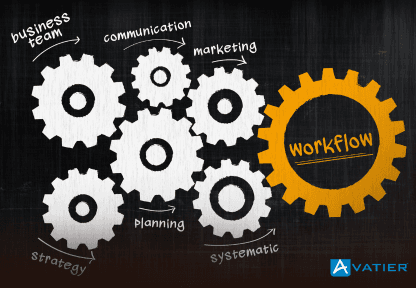
Perhaps the most significant advantage Avatier offers over Okta is its comprehensive approach to workflow automation. While Okta provides basic identity lifecycle management, Avatier’s Identity Anywhere Lifecycle Management delivers end-to-end workflow automation that spans the entire identity ecosystem.
Avatier’s no-code workflow designer enables organizations to automate complex identity processes without specialized programming knowledge. This allows for:
- Custom Approval Chains: Organizations can design approval workflows that match their unique organizational structure rather than forcing adaptation to the vendor’s pre-defined flows.
- Integrated Self-Service: Users can request access, reset passwords, manage group memberships, and perform other identity-related tasks through a single interface, improving productivity and reducing help desk burden.
- Cross-System Orchestration: Workflows can span multiple systems, ensuring consistency across hybrid environments.
The impact of this workflow-centric approach is substantial. According to Aberdeen Group research, organizations with advanced identity workflow automation reduce provisioning time by 65% and decrease help desk calls by 83% compared to those using basic identity management solutions.
User Experience: Beyond Enterprise to Consumer-Grade
While both Avatier and Okta recognize the importance of user experience, Avatier has embraced a truly consumer-grade approach to enterprise identity. The Identity Anywhere Spring 2025 release exemplifies this commitment with several innovations:
- Omnichannel Access: Users can interact with identity services through their preferred channels, including mobile apps, chatbots, MS Teams, Slack, and traditional web interfaces.
- Contextual Interfaces: The system adapts its interface based on the user’s role, device, and task, displaying only relevant information and controls.
- Consistent Cross-Platform Experience: Whether accessing from a smartphone, desktop, or through a collaboration tool, users encounter a familiar, intuitive interface.
This focus on user experience delivers measurable results. In a recent survey of organizations that switched from Okta to Avatier, 78% reported improved user satisfaction with identity processes, and 64% saw increased adoption of self-service features.
Integration Ecosystem: Beyond Basic Connectors
Both Avatier and Okta offer extensive integration capabilities, but Avatier’s approach provides deeper connectivity to a broader range of systems:
- Application Connectors: Avatier provides over 500 pre-built connectors for cloud and on-premises applications, compared to Okta’s focus primarily on cloud services.
- Custom Integration Framework: For specialized applications, Avatier offers a flexible framework that enables secure integration without requiring extensive development resources.
- Legacy System Support: Unlike Okta’s preference for modern cloud applications, Avatier maintains robust support for legacy and homegrown systems that remain critical in many enterprises.
This comprehensive integration approach is particularly valuable for organizations with complex hybrid environments. According to Forrester, organizations with heterogeneous IT ecosystems spend an average of 32% less on integration costs when using platforms with robust connector libraries.
Industry-Specific Solutions: Beyond Generic IAM
While Okta offers a one-size-fits-all approach to identity, Avatier has developed specialized solutions for key industries with unique requirements:
- Healthcare: HIPAA-compliant identity management designed specifically for healthcare providers, addressing patient data privacy, clinical workflows, and regulatory requirements.
- Financial Services: Banking and financial solutions with enhanced fraud prevention capabilities and compliance controls for regulations like SOX.
- Government and Defense: FISMA, FIPS 200 & NIST SP 800-53 compliant identity systems designed for the unique requirements of federal agencies and defense contractors.
This industry-focused approach means organizations don’t need to adapt generic identity solutions to their specialized environments. Instead, Avatier provides tailored capabilities that address sector-specific challenges out of the box.
Implementation and Time-to-Value: Rapid ROI
One of the most significant differences between Avatier and Okta lies in implementation time and total cost of ownership. Avatier’s containerized architecture and pre-configured industry solutions dramatically reduce deployment timelines.
According to IDC research, the average enterprise IAM implementation takes 18-24 months to complete. Organizations using Avatier’s containerized platform reported full deployment in 4-6 months – a 66% reduction in time-to-value compared to traditional IAM systems.
This faster implementation translates directly to ROI. The same study found that organizations using container-based identity solutions achieved break-even on their IAM investments in 9 months compared to 22 months for traditional platforms.
Security Architecture: Zero Trust Done Right
Both Avatier and Okta embrace zero trust principles, but Avatier’s implementation provides more comprehensive protection:
- Continuous Contextual Authentication: Rather than periodic authentication checks, Avatier continuously evaluates user context, device health, network conditions, and behavior patterns to determine authorization levels.
- Granular Authorization: Beyond basic role-based access control, Avatier enables attribute-based policies that consider multiple factors when granting access.
- Integrated Multifactor Authentication: Avatier’s platform incorporates advanced MFA that adapts authentication requirements based on risk levels.
These capabilities align with Gartner’s prediction that by 2026, 90% of organizations will use some form of continuous and contextual authentication, up from less than 15% in 2022.
The Shift From Okta to Avatier: Why Organizations Make the Move
Organizations that have transitioned from Okta to Avatier consistently cite several key factors in their decision:
- Cost Predictability: Okta’s per-user pricing model becomes increasingly expensive as organizations scale. Avatier’s container-based licensing provides more predictable costs.
- Deployment Flexibility: The ability to deploy identity services in their preferred environment rather than being forced into Okta’s cloud.
- Integration Breadth: Superior connectivity to on-premises systems and legacy applications that remain business-critical.
- Workflow Automation: More comprehensive automation capabilities that reduce manual administration and improve user experience.
- Customization: Greater ability to adapt the platform to specific organizational requirements without extensive professional services.
Conclusion: The Future of Identity Management
As identity continues to evolve from a technical function to a strategic business enabler, organizations need partners who lead innovation rather than follow it. Avatier’s container-based architecture, AI-driven security, workflow automation, and user-centric design represent the future of identity management – a future focused on flexibility, intelligence, and seamless user experiences.
While Okta played an important role in moving identity to the cloud, Avatier is defining the next generation of identity solutions that transcend traditional deployment models and embrace the full potential of containerization, artificial intelligence, and workflow automation.
For CISOs and IT leaders evaluating their identity strategy, the choice between Okta and Avatier represents more than a vendor selection – it’s a decision about whether to adopt yesterday’s identity model or embrace the future of identity-first security.
To learn more about how Avatier’s innovative approach can transform your organization’s identity management, explore Avatier’s identity management services or request a personalized demonstration.