October 10, 2025 • Mary Marshall
AI-Powered Risk Assessment: Transforming Enterprise Cybersecurity Risk Management
Discover how AI-driven risk assessment is revolutionizing cybersecurity. Learn why security leaders are switching to Avatier.
Avatier builds AI right into its core. It gives three main powers – Real‑Time Risk Info, Context‑Aware Scoring and Continuous Learning – that change how companies see danger.
Real‑Time Risk Info
- Never‑Stop Watching – The engine pulls data from identity folders, SIEM alerts, EDR tools and network monitors every second.
- Predictive Picks – Using both supervised and unsupervised models, it spots odd patterns before they turn into a breach.
- Anomaly Flags – A login from a country a user has never visited raises the risk score instantly.
- Auto‑Response – The system can ask for extra authentication, lock a session or start a quarantine without a human button press.
Example: A finance manager logs in on a personal phone while traveling in Brazil. The platform sees the weird combo, bumps the risk, asks for a second‑factor code and alerts the security team.
Context‑Aware Scoring
- Behavior Match – It learns each user’s normal login times, files they open and permissions they need.
- Environment Details – Device health, time of day and network security are added into the score.
- Business Weight – Actions involving money moving get higher scores than regular HR lookups.
- Seasonal Rules – During year‑end close, more privileged moves are expected and scored lower to avoid noise.
Example: The same finance manager approves a big payment from a work laptop during office hours – low risk. Do it from an unknown laptop after hours – high risk, extra checks appear.
Continuous Learning
- Model Updates – New data reshapes the algorithms so predictions stay fresh.
- Feedback Loop – When analysts mark an alert as false or real, the system learns to do better next time.
- Threat Feeds – Live feeds of new hacker tricks feed the engine with fresh indicators.
- Privacy‑Safe Sharing – Federated learning lets different companies exchange insights without sharing raw data.
Through these steps Avatier keeps the risk picture always tuned, wide‑ranging and ready to stop attacks early.
Real‑World Uses of AI Risk Checks
When AI sits at the center, a bunch of security jobs get smarter.
Smarter Identity Governance
- Bad Access Spotting – Machine learning spots odd permission mixes, like a buyer able to change finance settings.
- Dynamic Reviews – Access checks focus on the riskiest rights first, cutting audit work.
- Quiet Accounts – Users who haven’t logged in for months get flagged and their rights trimmed.
Adaptive Login
- Live Factors – Password checks now also look at device health and how the user moves the mouse.
- Behavioral Biometrics – The system watches typing rhythm to confirm identity without extra steps.
- Low‑Friction for Good Users – Safe sessions stay smooth, risky ones get tougher proof.
Auto Threat Response
- Early Heads‑Up – High risk scores trigger alerts before a breach spreads.
- Self‑Isolation – The platform can cut off a compromised ID, strip admin rights and slice the network segment on its own.
- Prioritized Work – Alerts ranked by impact help analysts focus where it matters most.
- Policy Checks All the Time – Rules are re‑checked every minute, staying fresh.
Compliance Help
- Risk Scoring for Laws – AI mixes GDPR, HIPAA, SOX needs with who accesses what to give a single compliance health readout.
- Live Controls – Deviations from policy pop up instantly.
- Auto‑Evidence – Logs, attestations and fix notes are gathered automatically for auditors.
- Law Change Watch – New rules from regulators feed into the engine, which suggests policy tweaks.
All of these show how AI moves a company from reacting after a problem to preventing it ahead of time.
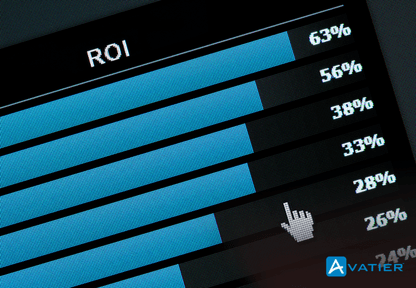
Numbers That Show the Gains
Avatier’s customers have posted real results after using AI risk checks.
- Better Security
- Privileged abuse fell 83 %.
- Threat detection time got 76 % faster.
- False alarms dropped 91 %, so teams work on real fights.
- More Efficient Ops
- Manual risk work cut 67 %.
- Review cycles became 74 % shorter.
- Help‑desk tickets on access fell 53 %.
- Stronger Compliance
- Audit findings went down 89 %.
- Time spent building reports cut 71 %.
- Fixing compliance gaps got 94 % quicker.
- Faster Business Moves
- New apps onboard 62 % faster.
- Disruptions from security issues fell 81 %.
- User happiness rose 57 % with smoother, risk‑aware access.
These figures back up the claim that AI risk isn’t a nice add‑on – it’s a real business lever.
How Avatier Beats Old‑School Vendors
Put Avatier side‑by‑side with big IAM names like Okta, SailPoint or Ping. Four things set it apart.
- AI‑Built Design – Data pipelines pull in many sources. Risk models can be tweaked fast for new tricks. Processing is lean, giving almost real‑time scores. Ongoing upgrades keep the AI fresh.
- All‑Around Risk View – Humans, service accounts and gadgets all get risk scores. Integration with SIEM and EDR gives one big picture, wiping out blind spots of point tools.
- Clear, Explainable AI – Every score shows why it happened, with a trail you can audit. Managers can shift weightings to match strategy. The XAI bits keep trust high.
- User‑First Feel – Good users see barely any hassle, risky moves get strong checks. Dashboards give heat‑maps and simple charts. Remediation steps are guided, shortening fix time.
These qualities give Avatier a solid edge over the older platforms.
Getting Started: A Simple Roadmap
A step‑by‑step plan helps firms add AI risk with little chaos.
Step 1 – Check and Build
- Look at today’s IAM set‑up and risk logs.
- Choose what matters most – money moves, data leaks or regulation.
- Pull all identity, log and intel data into one lake.
- Write the first KPIs – like “reduce privileged abuse by 50 %”.
Step 2 – Roll Out and Hook Up
- Install Avatier’s core AI engine and set data feeds.
- Link to SIEM, EDR, PAM and compliance tools for two‑way flow.
- Train the models with past events, tune thresholds until false alerts fall.
- Build auto‑playbooks that react to high risk scores.
Step 3 – Keep Improving
- Watch dashboards, track KPIs and fix drift in the models.
- Add new asset types – containers, serverless, edge devices.
- Automate more choices, keep humans for the big decisions.
- Put risk talk into board meetings and budgeting.
Following this roadmap gives the most value from AI risk while keeping daily work steady.
People Matter Too
Tech can’t protect by itself. Two human angles need work.
- Security Teams Evolve – Analysts become AI‑aided thinkers, not data collect‑ors. Training on ML basics, bias checks and explaining AI help them do the job better.
- Risk Culture Grows – All departments get simple risk views, making everyone own the problem. Decisions start with risk numbers instead of fire‑fighting. Board reports include AI scores, keeping leaders on the hook.
When people, process and tech line up, the protection becomes stronger.
What’s Next for AI Risk with Avatier
Future plans push AI further.
- Smarter Predictions – Simulated attack paths let teams test defenses before a real hacker shows up. Forecasting which tricks attackers might use helps prioritize fixes.
- AI Assistant Help – Large language models write playbooks, sum up incidents and suggest policy changes in plain words.
- Chat‑Style Risk Queries – Staff can ask the risk dashboard in everyday language and get quick, clear answers.
- Shared Learning Across Companies – Federated learning lets many firms learn from each other without revealing secrets, raising detection for everyone.
- Auto‑Tune Security – Closed‑loop bots change risk knobs on their own based on outcomes, moving toward self‑optimising protection.
These moves keep Avatier not just a vendor but a push for new security ideas.
Highlight: Cybersecurity Awareness Month 2025
October 2025’s theme of Cybersecurity Awareness Month, “Secure Our World,” asks all of us to step up. Avatier is joining with:
- A free risk‑assessment workshop that walks attendees through AI risk set‑up, using real case studies.
- An AI Risk Playbook you can download, full of step‑by‑step tips.
- Executive webinars that turn tech talk into business language for CEOs.
- A maturity quiz that shows where you stand now and what to do next.
All these resources are built to help anyone join the drive for a safer digital world.
Conclusion – “Why AI Risk Checks Are Now a Must”
The internet keeps getting bigger, and the price of a breach keeps climbing. Old static checks just can’t keep up. Gartner warns that companies skipping AI‑powered risk will see three times more attacks. Because of that, AI risk assessment has moved from a nice extra to the core of modern cyber‑security.
Avatier’s platform shows how it works: real‑time alerts, context‑rich scores and a machine that learns every day. Compared with classic IAM tools, its AI‑first design, whole‑system view, easy‑to‑understand scores and smooth user flow give a clear edge.
If you want a safer, faster and more compliant firm, the path is clear: adopt AI‑driven risk, embed a risk‑aware mindset across the org and use Avatier’s toolbox to protect what matters. Start the journey at Avatier’s IT Risk Management page and see how the intelligence‑first approach can future‑proof your business. The days of only reacting are over – it’s time to bring AI into the risk conversation and keep your world safe.